
What began as a single sentence posted to Instagram became an archive of voices living under slow political suffocation.
In 2023, after years of witnessing the erosion of democracy in Hungary under Viktor Orbán’s government, I asked a simple question: what does it feel like to be a woman in Hungary today? The response was immediate. Women and queer people across generations, professions, and social backgrounds wrote to me wanting not only to answer, but to finally be heard.
For years the Hungarian state has promoted an aggressive rhetoric of “family values” while systematically restricting reproductive rights, public dissent, and the visibility of those who do not fit its nationalist vision. In a 2021 radio address, Orbán declared that women belong “by the stove raising children,” a statement that exposed with unusual clarity the ideological framework shaping everyday life. But authoritarianism rarely arrives only through laws or speeches. It settles quietly into language, relationships, work, aging, silence, and the body itself.
No Bread For Us at Men’s Tables emerged from long conversations and portraits made between 2023 until the collapse of the Orbán regime. Combining interviews, photography, archival material, the project examines how structural misogyny enters intimate life: through domestic labor, fertility, economic dependence, fear, and self-censorship. These stories are rooted in Hungary, but they speak to a broader European and global condition in which women’s and minority rights are increasingly used as political bargaining tools within authoritarian systems.
1

At 32, I went to Slovakia to be sterilized, because I don’t want children.
Fog sat over the highway. Someone behind me was eating a salami sandwich, a middle-aged woman sprawled across two seats asleep on her phone, glam rock blasting from it’s loudspeaker. Everyone was bothered by it, but nobody dared say anything. These kinds of journeys always carry a sort of shy ordinariness. You sit among nylon jackets and thermoses, watching gas stations, trucks, roadside billboards spreading hate, while thinking about how simply certain things work elsewhere. Let’s not allow Brussels to have the last laugh.
One would not think that between certain countries not only the quality of the highways changes, but also who is allowed to decide over their own body. In Hungary, you have to be at least forty years old, or present three biological children, in order to be sterilized; as though such a decision first required proving something. I gave birth, is everyone happy now? As though our bodies were only temporarily ours, and everyone else could overwrite the terms of their use.
I found the clinic’s website in two clicks. It was in Hungarian, full of smiling women and carefully written information. The whole thing seemed as simple as booking an appointment for tartar removal. Eastern European sterilization tourism. Even the phrase is grotesque in itself; like a bad socialist joke. Women and men cross the border under the table so that neither the state, nor the church, nor a stranger’s hand can decide whether or not they have children.
The bus moves slowly through the grey landscape. The woman next to me snorts in her sleep, then turns over. I look at the faces around me and think about how long I have felt like an outsider.
I have always stood out. I love clothes, colourful hair. Quirky things. In the countryside you quickly learn how far you are allowed to stick out. That in the countryside you are finished if you are even a little different. And I was always a little different. It used to bother me that people constantly stared. But by the age of thirty-two I had grown tired of trying to please everyone all the time. Sometimes I wonder how strange it would be if there were many people like me. I wonder how much of a rebellion it is to do nothing more than live the way you want.
I never wanted children.
For very long, I did not dare say this sentence out loud. Instead I circled around it, joked it away, redirected the conversations. One learns that after certain statements the air in the room changes. As though a sudden draft had appeared. Of course nobody found it surprising that I took birth control pills for fifteen years. The medication, the ritual of my everyday life, always sat in my bag beside chewing gum and my apartment keys. I loved its precision. Its predictability. That I did not have to think about my body. Everything ran smoothly. And of course it was convenient for men too, they did not have to carry the burden of contraception.
Then after thirty, doctors began pronouncing the same words in a different tone of voice. Blood clots. Stroke. Hormonal risks. The quiet background noise suddenly grew louder. So I stopped taking the pills. Sterilization did not feel dramatic at all. More like the conclusion of a long negotiation, where at last my body and I signed an agreement.
The bus passes through a small town. Hardware stores, empty parking lots, tobacco shops drift past the window. I lived in England and Germany, and still I came back. I was homesick. It is sad to admit, because so often I hate everything around us here. But I missed the Danube. The closeness of water. Even though I am not from Budapest, but Debrecen. I missed the people too, even their anxiety. That particular Eastern European exhaustion one only notices abroad once it no longer surrounds them everywhere.
I am a data engineer, I earn well, I try to give myself everything that was missing from my childhood. Safety. A home. Beautiful objects. For a long time, I thought endless desire was the worst part of poverty; later I realized it was shame. How visible it is on you that you do not have. Not having, like a contagious disease, keeps friends away. My father was a bus driver, my mother worked in retail. My current style is often inspired by my childhood. Those images I longingly looked at back then. Those clothes we could never afford.
When I announced that I was going to be sterilized, people looked at me as though I were preparing for some irreversible madness. Yet nobody minded that a woman could spend a decade and a half taking hormones. That she has to grow accustomed to endless migraines, mood swings, constant calculation, perhaps gain weight, or in worse cases suffer a pulmonary embolism. But the moment she says she does not want children, and wants to make that decision permanent, suddenly everyone becomes deeply uneasy. As though some irreversible rudeness were about to occur.
Because a woman’s duty is to.
Because you will change your mind.
Because one day you will anyway. – These sentences are everywhere, like the smell of used oil, soaking into curtains, clothes, skin, hair.
After fifteen years, I am going to menstruate for the first time again. Sometimes I think about it with adolescent curiosity. I am waiting for the return of an old acquaintance I barely recognize anymore. I do not know when it will come. I do not know whether it will hurt. My body functioned without me for so long that now I observe it like a foreign object. Sleeping Beauty waking from a long sleep. Moving slowly. Squinting. Searching for the light.
I am heading toward Slovakia on a battered coach bus, watching these hateful billboards while people sleep around me; anxiety overtakes me, our future is eroding. What should I do, what should we do. What will become of me, what will become of us. Perhaps after Slovakia my anxiety will lessen. Because right now I am afraid that if, God forbid, I become pregnant, then the decision will not be mine, but the regime’s. I love dystopias very much, except when they happen to me. And dystopia is beginning to feel frighteningly current.
A Polish friend brought me morning-after pills from the Netherlands, told me to stock up; who knows what will happen. Other women write to me secretly, asking me to get some for them. An invisible female infrastructure, an underground network has formed; we exchange medication, addresses, experiences. Forbidden books and illegal radio broadcasts. Women pass on tiny techniques of survival to one another, the way recipes or prayers once were passed down. And meanwhile everyone pretends all this is perfectly normal.
My grandmother, of course, understands my anxiety. She looked me in the eye and simply said: if something needs to be solved, then it must be solved. Her sentence contained the entire twentieth-century history of women. Years. Events. Secret abortions. Bloody sheets washed in basins. Untold stories. Knitting needles, hangers, midwives, and improvised solutions. Because women always solved things somehow. They passed on survival methods to one another, recipes, sewing patterns, prayers. Quietly, among themselves, through fear, through shame, in good times and bad. We absorbed the techniques of silence with our mother’s milk.
Nobody needs to know about it.
I also remember when, before an STD screening, someone asked me whether I had come because of my work. Based on my colourful hair and tattoos, they assumed I was a sex worker. I answered: no, I am simply a responsible adult woman.
The sentence stayed with me for a long time.
I realized how rarely female responsibility is associated with self-determination. As though consciousness were only acceptable if it ultimately led toward motherhood. As though every female decision sooner or later had to arrive in the same room.
Not many of my friends want children. Sometimes I feel an entire generation has become permanently exhausted. Like a faucet battered for years by salty sea wind, our image of our future has eroded.
One day I would like a bigger apartment. Not because of a children’s room. I want a large walk-in closet. So I can hang up all my glittering tulle dresses. People call me a meringue in them. I used to be a crossdresser. My self-image changes constantly, and that is alright.
The bus slowly exited the highway. The fog still sat among the parking lots and apartment blocks. Around me people began to stir, bags, coats, phones reappearing. The glam rock woman woke up and turned off the music. I looked out the window at the Slovak small town, and suddenly everything felt entirely ordinary. As though I had not arrived at the end of a decision, but finally at myself.
2

In Csíkszereda, winters are so cold the dogs’ breath hangs motionless in the air. The chickens’ water has frozen again; my grandmother would grumble every morning as she was breaking the ice with a stick. Before school, my mother laid my clothes out on the radiator so they wouldn’t be freezing cold when I put them on. I used to stare at those clothes for a long time. The sweaters, the trousers, the thick tights I hated because they squeezed me so tightly I could barely breathe in them. Hey, kid, you’re suffocating from your pants, they used to mock me at school. As a child, I felt that every fabric had some secret nature to it. There are clothes that let a person breathe, and there are clothes you move around in as if someone else’s body had been pulled over your own.
I was born in Transylvania, in Csíkszereda. From a very early age, I knew I wasn’t gender conforming. I was the little boy with the coolest Barbie. I made clothes for it out of old socks, curtain fabric, my mother’s tights. I loved watching how something could change completely because of a piece of fabric. Later, my mother and I used to joke that when she got pregnant with me, she had wanted a girl. When I came out to her, she just smiled. The world is colorful, she said.
At the time, I didn’t understand how important would that sentence become.
I knew very early on that I wasn’t straight. We had internet, and I could read about things I still didn’t have words for. For a long time, I thought that eventually, with enough time, I would simply become whoever I really meant to be. I was fifteen when I first spoke to my mother about it. For days afterward, I kept watching to see whether anything around me would change. But the bathroom door creaked the same way, the laundry kept drying in the kitchen exactly as before. That was the strangest part. Nothing happens, and yet everything becomes different.
For me, self-discovery was never some single moment of realization. It was more a constant movement. There were periods when I dressed more femininely, others when I was androgynous. I always loved experimenting with my hair, with makeup, with clothes. I love dressing up, but not for occasions. Just because. On a Tuesday afternoon, for example. Platform shoes, a sheer shirt, a skirt, makeup. Before going out, I spend a long time getting ready. I look at myself in the mirror and watch the persona slowly take shape.
In this world, simply being visible is already a statement.
And of course, in a small town you quickly learn how visible you are allowed to be. People turned around after me in shops. They stared at me on the bus. After a while I could feel their eyes before I even saw them. Then slowly they got used to me. Back then I was the only openly queer person in Csíkszereda.
I got tired of constantly being watched.
I was nineteen when I moved to Budapest. I thought it would be easier there. Budapest is a more open city than Csíkszereda. And still, for a long time, I straightwashed myself. I work as a DJ, the scene is overwhelmingly made up of straight men in their thirties. I barely met any queer people. It wasn’t a conscious kind of closeting. A person simply adapts. They wear different clothes. They lower their voice. They talk less about themselves.
During the day I sat over fabric samples; at night I DJed. I love that one hour before dawn when the bass is so loud people stop paying attention to one another. From the DJ booth I watch faces shining with sweat, smeared makeup falling apart. As if everyone had only borrowed their body for the night. Before I perform, I spend a long time getting ready. I choose an outfit, do my makeup, sometimes change clothes three times before leaving. At those moments my room looks like a looted theater dressing room.
Then at some point I realized I no longer even knew who I was.
About six months ago I started reconnecting with Budapest’s queer community. I listen to people’s stories, we talk, and I think it’s probably our stories that hold us together. Through those stories we are trying to create a more livable place for ourselves and for others too. For me. For you. For them.
Lately everyone carries a great deal of uncertainty about the future. Whether it’s personal problems, family issues, healthcare, or school, everything eventually leads back to politics. The tension is palpable everywhere, in everyone. One of the remarkable things about the queer community is that it can survive anything, but right now everyone is anxious.
Especially now.
Ever since the idea of banning Pride was raised, many of us feel the noose tightening around our necks. Trans healthcare is in a terrible state. The future of rights organizations is uncertain. Can things get even worse than this?
In Budapest I’m rarely subjected to outright violence, but my experiences back home stayed deep inside me. Even now there are moments when I don’t feel safe. For example, when I go outside wearing a skirt. I think it should be completely normal for men to wear skirts. In pop culture it already is. And still there is always that second guessing inside me: will I be safe if I walk outside like this?
I feel the stares before I see them.
I constantly have to weave these mental spiderwebs. What should I wear. How should I get home. Can I hold my partner’s hand in the street. Will something happen because of it.
And yet the ideal life would actually be very simple. Not having to think about whether what I’m wearing is provocative. Not having to be afraid of holding my partner’s hand. Having access to hormone treatment and gender-affirming surgeries. Having marriage. Adoption. Knowing a child would not be harmed for growing up in a queer family.
I wish everything didn’t have to be this difficult.
Meanwhile, you try to do something. We go to protests. We talk. We argue things through, even over family lunches. Sometimes we willingly step into conflict.
This summer I went home to Csíkszereda. On the main street, two very young queer boys walked past in platform shoes with painted nails. They were laughing loudly. Nobody shouted after them.
I watched them for a while.
When I was a child, I could never have imagined something like that.
A dream had come true.
If everything stays like this, I don’t want to stay in Hungary. The hopelessness swallows everything. I want to leave the country. I still don’t know where I would go. I only know that if this political situation remains the same, one day I will definitely leave.
3

At first, every child protests. None of them arrive in the world like they do in advertisements, pink and smooth. They come offended, with a thin, indignant cry. Their very first complaint is that they had to be born here. In Hungary. In Eastern Europe. Into this neon-lit, drafty, overheated system that smells of disinfectant.
People here wake up early. In winter, the cold settles over the garden as if it had been cast from tin. On the hillside, the black branches of the trees look as though they had been drawn in charcoal on gray paper. We went out into the yard wearing rubber boots. I was born near Miskolc, into a peasant family.
By morning, the snow around the bus stops was always gray. We are a healthcare family, all of us tired people. My mother was a nurse. In the evenings she sat in the kitchen with a mug of tea in her hand, her uniform carrying the smell of disinfectant and boiled potatoes. I would look at her cracked hands, the thin veins in her wrists. In her posture lived the entire hopelessness of Hungarian healthcare.
I will definitely never be like that, I used to say as a child. I don’t want to get up before dawn and set out shivering through the fog. I don’t want to deal with other people’s bodies. I don’t want to bring strangers’ pain home in the sleeve of my coat. I don’t want to wipe up other people’s shit.
I wanted to dance. A light, supple existence. A stage, lights, music. A body that doesn’t hurt, only moves. A place without blood, without exhaustion, without constant lack of money, without cold dawns, bus stops, and hopelessness.
And yet, of course, I ended up in healthcare. My mother only smiled.
“I infected you,” she said.
After Semmelweis University, I got a position in obstetrics. It took me a while to get used to this world where it is always either too hot or too cold, where under neon lights there is neither day nor night. I remember the first delivery rooms as something like an Eastern European film set. A hospital on the edge of town. Metal beds. Walls painted green. Flaking plaster. At the end of the corridor stood a plastic Christmas tree that had remained there even in January. At the nurses’ station, cold coffee sat in plastic cups, coffee that could only be bought from the vending machine if it was drowned in sugar. Socks drying on radiators. A constant draft moving ankle-high above the linoleum.
Then, during one birth, I understood that this was what I wanted to do after all. A woman lay before me. Sweat had plastered her hair to her face. There was blood at the corner of her mouth. She was screaming. Her face was twisted with pain. Beyond the window, apartment blocks rose through the fog. The whole thing was terrible and somehow sacred at the same time. Birth is always like that. One body trying to emerge from another body, like trying to force a piano through a narrow doorway. Creaking. Panting. Blood. Silence.
There was a birth one winter that I often think about. Outside, thick snow was falling. In the parking lot, slush the color of diluted cement. The woman had come in before dawn from a village in Borsod County. Her husband stood by the door in rubber boots, holding a plastic bag. Inside were slippers, a salami sandwich, and a bottle of lemon tea. The CTG paper unrolled in a long strip across the floor. Meanwhile, the doctor sat at the computer without even looking at her. Typing. The smell of fried schnitzel drifted in from the corridor. By then the woman hadn’t slept in forty hours. She cursed in a hoarse voice. Sounds tore out of her that reminded me of the noises I had heard during pig slaughterings as a child. Her eyes were bloodshot. Her mouth was dry. Sweat poured from her body. The doctor casually threw out a remark that she wasn’t doing it very well, but never mind, he’d push for her. I remember that at that moment I most wanted to rip the spotlight out of the wall. Because nobody wants that child to be born more than its mother does. Nobody.
Then suddenly the baby’s head appeared. Black hair. Blood. Saliva. The whole thing looked as if something were being pulled from a dark river. Her husband stood motionless by the door. Snow slowly melted from his coat onto the linoleum. And then the baby cried. Thinly. Offended.
It was moments like that that kept me there for fifteen years. Fifteen years of neon lights. Fifteen years of rubber gloves, bloodstained sheets, ringing bells. Fifteen years of male dominance. Because men are the ones who tell us what we feel, how much pain we’re in.
Everything was always changing. Whatever we managed to achieve through enormous effort would be erased after the next change in management. There was always a new man who swept the crumbs off the table with a single gesture. There was a birthing tub in the maternity ward, yet it couldn’t be used, even though it would have cut the pain in half. Then why is it there? I always asked. For display. Like a potted plant in a government office.
I always wanted to work in home birth. I felt that what hospitals offered was often not enough. For some women it is enough; others simply drift with events. But for some, a single careless sentence is enough to make them never want to give birth again. Because there is something cold and clinical in the whole system, where a woman is often reduced to a body. A piece of flesh opened under a spotlight. The baby is born, they carry it around for everyone to see, everybody is happy, and the mother is left staring ahead, wondering what happens to me now, what happens to us, will I be able to keep my child alive, what if I don’t have enough milk, what if the baby gets sick, what if the baby dies. And then someone tosses out a half-sentence. “I’ve seen prettier babies.”
These sentences remain inside women the way coal dust remains under a fingernail. You can never entirely wash them away. Sometimes mothers keep coming back to us with their children for a long time afterward because they have been made to believe they are unfit for motherhood.
Meanwhile, outside, an entire country is decorated with billboards. Smiling families stand at bus stops in knitted sweaters: three children, a dog, a flag. Former Hungarian president Katalin Novák, in full makeup, is cleaning windows. How else could she possibly do it? Hungary has set a world record in family support, the posters claim. Below them, comments. One woman writes that she doesn’t want tax exemptions. She wants decent healthcare and education. I read these comments at two in the morning while sitting beside a woman in labor in a lavender-scented apartment. Warm water fills the bathtub. A television is playing on the other side of the wall. Somewhere in the stairwell, someone is frying onions before dawn. And I think about what a strange country this is. A place where they promise lifelong tax exemptions, yet there are not enough midwives. Not enough delivery rooms. Not enough time for women.
Women giving birth experience enormous amounts of trauma. The care is dreadful. Not to mention the verbal abuse. Healthcare workers do not understand women because they themselves have been hollowed out by the system. They no longer consider it important to sit down and talk with a patient. Births move through the system like products on an assembly line. You can see this mentality in the rate of Caesarean sections as well. There, too, the doctor’s schedule and convenience often come first. The WHO recommendation is to keep Caesarean rates between five and fifteen percent. In Hungary, there are institutions operating at sixty, seventy, eighty, even ninety percent. Don’t tell me that nine out of ten women need a Caesarean. That isn’t true. It’s simply more convenient for the system. More predictable. It requires less time, less effort. It’s easier to say: “Seven-thirty tonight should work.” That’s all. The consequences are immeasurable. The baby is taken out—often much earlier than necessary. This mentality interferes deeply with the way life itself unfolds. The system is not designed to guide birth in a way that serves the mother with dignity. We switch on the spotlight and gather around the woman. Some women get over it. Others carry the trauma for life. Imagine lying beneath a hundred-watt bulb while medical students walk in, delighted to observe you like an experimental animal, surrounding you and saying, “Let’s see how she’s progressing.” Naturally, some women respond: “No, thank you.”
Ten years ago, nobody talked about birth trauma. People thought this was normal. Painful, torn, wounded—but natural. They genuinely believed it. They believed humiliation was as much a part of childbirth as blood or the smell of the umbilical cord. That if someone barked orders at you while you were splitting apart with pain, that was normal. That strangers examining your body under a glaring bulb was normal too. The woman will endure it. The woman always endures it.
Obstetrics is fundamentally a man’s world. It provides care. It doesn’t understand. It doesn’t feel. It doesn’t care. It solves the problem. For a long time I wondered why doctors didn’t pay attention, why they failed to notice. Others have wrestled with this question too. A nurse or a midwife becomes a nurse or a midwife because she wants to help.
Since 2011, home birth has been legal and regulated. The legal framework exists. Despite that, midwifery remains a stigmatized profession. Even today, for example, in the thirty-sixth week we must send information about the planned home birth to the pediatrician. Their only task would be to register the expectant mother. Often the answer is: “I won’t take part.” Or no answer at all. Or a lecture. Some taxi drivers won’t take us. Midwifery is surrounded by prejudice and provokes extreme reactions. There are doctors who ask for my ID and documents, even though I work legally and officially and they could verify everything themselves.
Why do pregnant women come to me? Sometimes because of a bad experience, a traumatic birth. Sometimes a humiliating examination is enough. The woman becomes a birth machine; what happens to her no longer matters. The baby is born, everyone rejoices, and what happens to the mother? Inside the mind of a new mother, a thousand thoughts are swirling: what will happen to my child, what will happen to us, what if a car hits me, I’m the one feeding this baby, what if I die, what if I get sick, what if I don’t have enough milk. She runs through every possible scenario. And then someone casually adds: “Let me see… Ah, I’ve seen prettier babies.” To the doctor, it’s just another baby. To her, it is her child. A few comments like that are enough to shake a mother’s confidence in motherhood itself.
If a home-birthing mother falls outside the twenty-minute rule—if there is no hospital within twenty minutes of the birth location—then a birth center or a rented apartment may be the only option. In practical terms, three-quarters of Hungary is excluded. Opportunities like this exist almost only around Budapest, and perhaps in parts of western Hungary. On top of that, regulations require two midwives to attend a birth, which is nearly impossible because there are so few officially practicing midwives in the country. In those situations I cannot take on the mother. If I do, I can be banned, fined, prevented from practicing. This is one reason there are so few legally operating midwives. I work in a practice where we accept births only in complete compliance with regulations. You have to understand the consequences. Otherwise you end up in court.
I kept searching until I found a place where I felt I could practice midwifery officially and legally. In other countries, home birth and the services surrounding it are free. Not here. Hospital birth is free; home birth must be paid for out of pocket. Fortunately, it is not an enormous sum: around 300,000 forints for the entire nine months, including the birth itself. There is no midwife who lives from this alone. This profession does not make financial sense. People do it because they love it. You can earn 150,000–200,000 forints a month from it. You can’t live on that. It isn’t even enough for rent.
There were times when this life weighed on me more heavily, but I’ve grown used to it. Everyone knows what comes with it. What breaks my heart is that my own child will probably relate to me the same way I related to my mother. I’m not sure they will understand why I want to live for other people. Why this defines everything around me? At some level, it’s an obsession. I left obstetrics years ago because I couldn’t bear it anymore. I confronted people. I was fired. The doctor wanted to get births over with; I wanted beautiful births for the mothers. I couldn’t live with that tension. I went to work for a private ambulance service. It was good, but I felt that nothing had any meaning. Meanwhile, countless women kept reaching out to me, and in the end it was because of them that I returned. They were waiting for me. That was when home birth emerged as a possibility. I came back. I’ve been doing it for almost three years now.
How does it work? They contact us through the website. We collect their information and medical records. Official prenatal care must take place regardless. An appointment lasts an hour, and during that time we ask expectant mothers about their own births. Why do they want a home birth? What brought them here?
The wonderful thing about home birth is that you get to remain yourself. Within institutional settings that simply cannot happen, if only because of the scale. Preparation for birth is continuous; we discuss every topic. After the birth we visit the mothers and send lactation consultants. What distinguishes this from institutional care is its focus on the individual.
Our greatest goal is that your birth experience leaves you wanting to give birth again.
4

My mother always cleaned whenever she thought someone might see her. If the curtains were drawn and people could see through the window from the street, she’d immediately grab a duster, sweep, and tidy up. She used to say that a woman shouldn’t just sit at home doing nothing.
One of my most deeply ingrained memories is combing the fringes of the rug. I’m kneeling in the living room, the brown rug in front of me, a small comb in my hand. According to my mother, a home is beautiful when even the fringes show how well it’s cared for.
Around 2016, my mother’s health began to decline. At first, I just had to turn off the gas; later, I had to lock the front door as well. Around that time, she started talking more and more about the past—her childhood, her siblings, her mother. Sometimes she’d wake up wanting to go back to her parents’ house. Once she tried to climb out the window because she thought they were waiting for her at home, in her parents’ house.
That was the year they diagnosed her with Alzheimer’s disease.
Slowly but surely, everything changed. In 2018, she was still reading. A lot. Books lay by her bed, on the table, in the armchair. She loved to sew, do needlework, bake and cook. She was always doing something. It’s hard for me to imagine her being still, because she was always on the move her whole life.
Then one day she sat down to sew and couldn’t thread the needle. She tried for a long time, over and over again. Even today she sometimes fiddles with her fingers, as if searching for something in the air, but the movement no longer finds its mark.
Now she can’t even say her own name. She can’t tell us when she’s hungry or thirsty. She talks, sometimes asks questions, and then answers herself.
It often feels as if we’re listening to her from another room, one we can no longer enter.
I retired in 2018 and moved in with her almost immediately. Until then, my younger brother and his family had been looking after her; she was never completely alone, but at that point she was still living in her own home. My sister moved back home in 2019. Since then, the two of us have been caring for her.
By then, she was already falling frequently. It became increasingly difficult for her to walk, and eventually she could no longer take care of herself at all. Her skin had thinned, and she bruised easily. There was always a new bandage on her arm or leg.
In 2018, she fell and broke her hip. She had two surgeries. The doctor said there was little chance she would walk again.
Yet she learned to.
The physical therapist came once a week. He showed her how to use the walker, how to get up from the bed. The apartment was filled with assistive devices: a cane, a walker, an anti-bedsore mattress, pill boxes. And we slowly learned how to keep someone alive.
We adjusted his medications based on experience. The psychiatrist didn’t really know what to do with him anymore. He couldn’t answer even the simplest questions.
Sometimes, even now, he pretends to be cleaning. He smooths something at the edge of the bed, tidies the blanket, fiddles with the pillow. As if he’s still afraid that someone will peek in the window and find a mess.
5
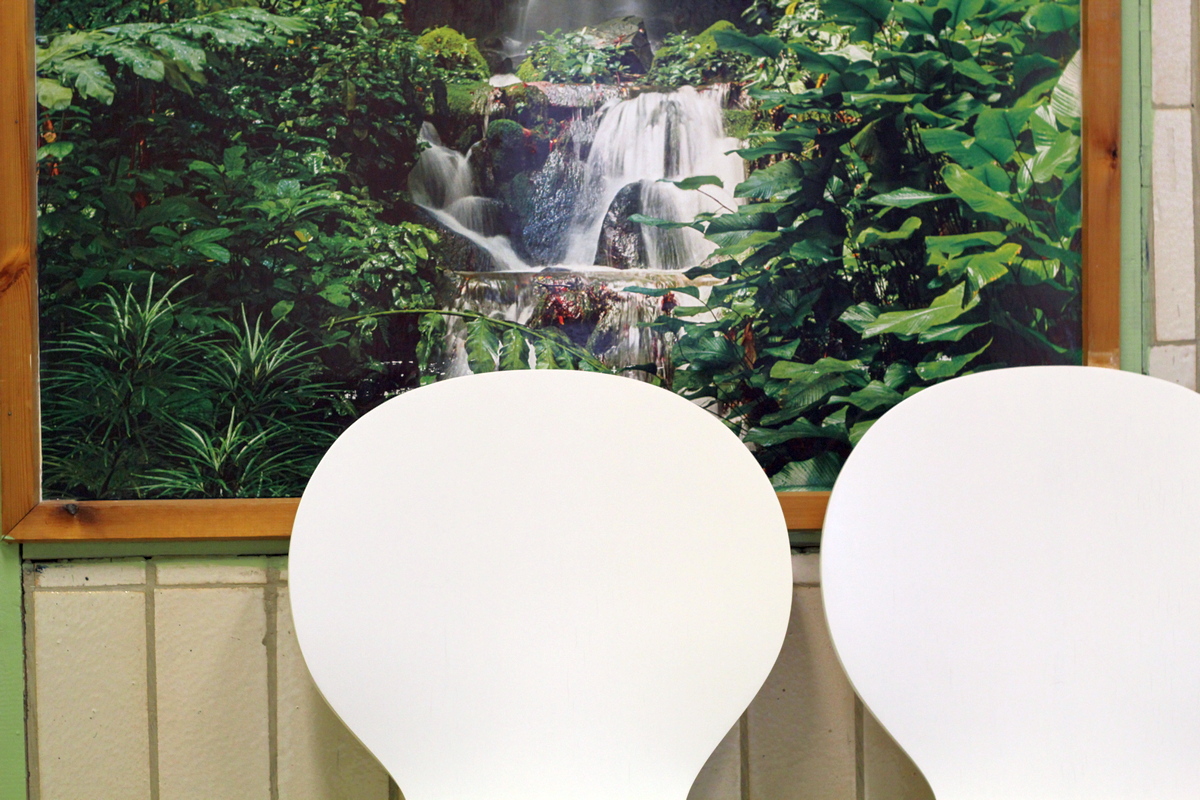
The hallway looked the same this morning as it had for months. Time doesn’t move forward here; it just piles up layer upon layer: worn linoleum, where the cleaners’ marks always linger a moment longer than they should; an olive-green wall that someone once tried to cover with white paint, the boundary between the two colors stubbornly returns. Like a wound that’s healing poorly; a row of plastic chairs, one of which has a dark piece of gum stuck to its leg, left there by someone with a tiny, quick, and inconspicuous movement. Insignificant evidence that others have sat here too, all waiting just as motionlessly for their own time to come.
We sit there, grabbing hard the straps of our bags, loosening them, then grabbing them again, we hope that this insignificant action could somehow control what is about to happen. We don’t speak to one another in the hallway, even though we all know why we’re here. This knowledge isn’t a shared language, but rather a series of parallel private thoughts that everyone repeats to themselves, using different words.
By then, people had been talking about the decree for years out there, in that other world where things are given names, and debates are built around those names. There was a protest over it in September 2022, bigger than the previous ones, and then it came up again and again later, as if its existence had to be reaffirmed from time to time. Its official name was some dry identifier, but in common parlance it became something else, a word that carried weight in and of itself, as if there were something in its sound that predetermined how one should think about it.
The doctor doesn’t say much. Not because he has nothing to say, but because sentences work differently here: they’re shorter, more matter-of-fact; any unnecessary explanation only slows down the machinery that needs to function. The examination schedule is familiar, routine; the movements of bodies and instruments align with one another without anyone paying special attention to this coordination.
Then comes the moment around which the entire system – with its long sentences, legal provisions, and debates has been built: the voice. It is always signaled with the same phrase; it never changes, and there is no inflection in it to indicate whether it is information, a request, or an instruction. It’s more like just part of the procedure, a step that can’t be skipped without the entire process falling apart in some formal sense.
I, there, in that examination room, didn’t even pay attention to the voice at first, but rather to why it was necessary. What kind of information it was supposed to provide that I wouldn’t have known otherwise. I had known everything essential about my own situation for a long time, much earlier, during much harder days, when there was no clinic, no protocol, only counting and nights, worry, despair, and crying. The voice added nothing to this; it changed neither the facts nor the way I related to my body or my decision. It was more like a mandatory stop at the end of a journey long since completed, where someone wants to check once more to see if I really did go through it.
Later, I often tried to understand what this had to do with a system that otherwise emphasizes efficiency, evidence, and professional consensus. It has no demonstrable health benefits; it doesn’t improve anything that could be measured medically; it’s more of a symbolic gesture that has meaning but no function. Shame and humiliation, however, are inherent to the system. WHO recommendations also suggest that interventions of this nature do not aid either decision-making or the quality of care; rather, they reinforce a situation in which the patient is not merely ill but is drawn into a moral dimension.
What bothered me most was not even that this voice was heard, but how easily it became a requirement. As if healthcare could make up for something that a society is unable or unwilling to address elsewhere: the lack of education, unequal access to contraception, decisions made in uncertainty. Because all the data showed that such rules do not have the effect they are intended to have. They do not change the numbers, but rather the atmosphere of the situation. How a person feels in a doctor’s office, when they are already experiencing their most vulnerable moments.
When I came out, the hallway continued exactly where it had ended before. The women were sitting just as they had been, staring straight ahead just as they had been, and still not speaking. The city kept rumbling on as if nothing had happened, and in fact nothing spectacular had happened—just a brief sound that someone somewhere considered important, and which many people still refer to as if it were some kind of explanation.
At the time, I couldn’t quite put my finger on what was most unsettling about it. Later I realized that perhaps it was the fact that at a moment when a person is preoccupied with their own decision, someone else nevertheless decides that a reminder is needed that this decision cannot remain entirely their own.
And this kind of reminder is sometimes louder than the sound itself.
6

There are certain memories in a person’s life that they never forget. For me, my first period was one of those. I saw the red stain on my underwear and thought I had committed a mortal sin, and that God was punishing me for it. I desperately searched for my sins, trying to make amends for everything, just so this whole thing would stop, so my shame wouldn’t continue.
At home, there were many things we couldn’t talk about. In my mother’s family, divorce was a source of shame. A relationship argument. A bad report card, or even a C. Practically everything. Problems weren’t discussed; they simply vanished into silence. I remember those moments when, as a child and later as a teenager, I tried to share something with my mother. Sorrow, fear, a question. She always shut me out. She didn’t know what to do with my sensitivity, my curiosity. She saw my troubles as a source of shame, as things that weren’t proper to talk about.
Religion was part of that, too. For us, Christianity wasn’t a source of comfort, but a set of rules. There was a lot of talk about sin, but little about the body. As a child, you quickly learned that you were being watched—even your thoughts. That there were clean things and unclean things. Good girls and bad girls. I don’t remember anyone ever speaking openly about the female body, sexuality, or menstruation, but shame was somehow present everywhere. It was ingrained in the movements, the silences, the downcast eyes. By the time I was a teenager, it was completely natural to me that things related to the body had to be hidden.
My mother was withdrawn, shut off in her own little world. She was trying to survive my father, her marriage, my father’s verbal and often physical aggression, her own family. Looking back now, I think she loved us. But back then, all I really sensed was a wall. There was something big, black, and hard about her. And there was nothing you could do with that hardness. You couldn’t argue with her or yell at her. So I stayed quiet, just like everyone else in the family.
Yet, in her own way, she tried to love us. I remember that at night, when we were already asleep, she would sew clothes for us in the dining room. Skirts, stage costumes. That was her language. She couldn’t speak. Once I wrote her a poem; it was titled “I Want to Be Loved.” When I gave it to her, she burst into tears. But even then she didn’t say a word. She didn’t hug me.
As the middle child, my mother was raised to believe she wasn’t important. Her existence was almost invisible, and it stayed that way. She learned to keep a low profile, to serve the family in silence, to take the blows. Over time, she even developed a hunchback. For a long time, I thought she simply had bad posture, but now I see it more as if she’d spent her whole life trying to make herself smaller so she wouldn’t get hit. She only began to open up after my father’s death. Now I see in her the wonderful person she might have been. I’m sorry I didn’t get to know her that way.
Of course, she’s still constantly on the go. She can’t even sit through a whole lunch with us. She’s always keeping an eye on who needs what, what to bring in, what to take out. You can’t just shed a whole lifetime like that…
I got my hands on *The Book of Teenage Girls* when I was around twelve. Even the title was exciting. I read it in secret, under the covers or locked in the bathroom. It wasn’t important because it was a particularly daring book, but because for the first time I saw things written down in it that no one had ever talked to me about before. That the body changes. That there are words for what happens to it. That the female body isn’t just something to be ashamed of.
My mother found the book in my room once. She took it, and I never saw it again. I don’t remember if she said anything. Probably not. In our house, even prohibitions had no language.
Then, when I was thirteen, my period came.
I suppose it started just like it does for everyone else. What’s more interesting is how I reacted to it. Imagine a thirteen-year-old girl who’s completely shut off in her own world. She learns not to communicate. She learns that she doesn’t matter. That she can’t ask questions. And finally, she learns not to know things.
When I saw that red stain on my underwear, I had no idea what it was or how it got there. I had never heard of menstruation before in my life. My mother, of course, hadn’t prepared either me or my sister for it.
I still remember that moment to this day. I’m standing in the bathroom, looking at my bloody underwear, and I’m terrified. I didn’t think I was sick. I thought I was a sinner.
I wore four or five pairs of panties on top of each other, and that’s how I went to school. All the while, I was constantly afraid that my shame would be exposed. I hid the used panties in a plastic bag at the very back of my closet. This went on for a year. Then one day, while cleaning, my mother found the bag.
She put them on the table in front of me. The panties.
And she said:
“Next time, use cotton wool.”
Nothing more.
That’s how it started.
7
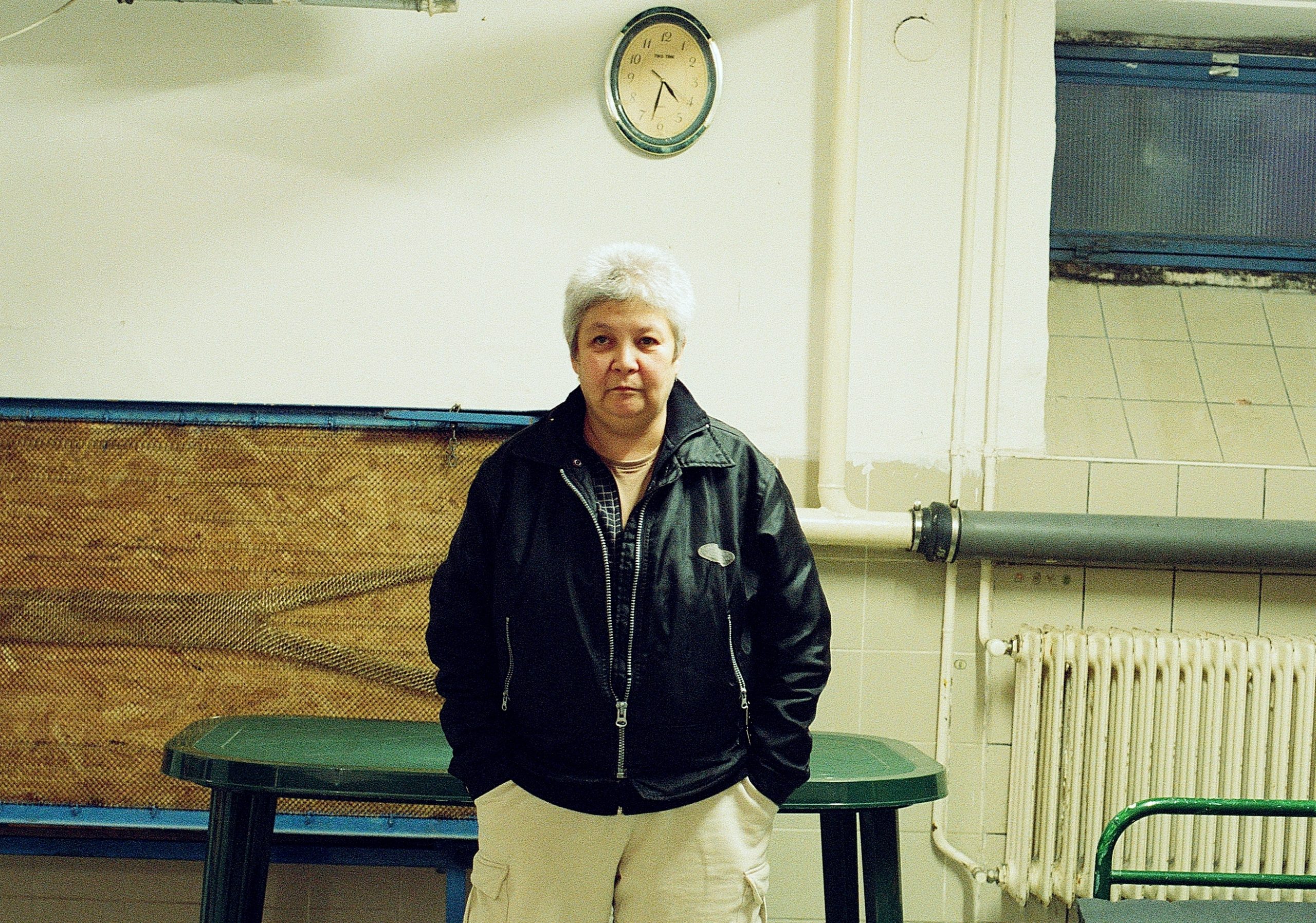
In the evenings, I always parked near the school, but in a different spot every time. Sometimes under a chestnut tree, sometimes on an empty lot, sometimes on a quiet side street. It was still dark in the mornings when I heated water on the little gas stove for my son so he could wash up before we left.
In the trailer, the windows were always fogged up in the winter. By morning, our breath had condensed on the glass, and I’d wipe it from the inside with my coat sleeve so we could see out. I’d park near the school. That was the most important thing. So he wouldn’t have to walk far, and so no one would ask any questions.My son and I lived in a trailer for a year. He was still in elementary school then. In the winter, condensation ran down the walls of the trailer, and in the summer, it was unbearably hot inside early in the morning. I did everything in my power to make sure no one noticed that we didn’t have a home. My son went to school in clean clothes, with his hair combed, and a snack in his backpack. I wouldn’t have survived if they had taken him away from me.
I’ve been working with homeless people, mostly women, for over twenty years. I do the behind-the-scenes work at the Fedél Nélkül editorial office and keep in touch with the distributors, but after work I often go out into the woods as well. In the summer, the path is dusty, and dry branches crunch underfoot; in the winter, the mud reaches up to your ankles, and the bitter, smoky smell of wet wood is everywhere. Shopping carts sit at the edge of the forest, blankets dry on stretched-out fishing lines, and in the evening, small fires glow among the trees. Often we just sit down somewhere to talk. On a fallen tree trunk, an upside-down bucket, or the edge of a mattress covered with a plastic sheet.
Some come to me with gynecological issues; others simply because they have no one else to tell what happened to them. The hardest part is always when a young girl sits down next to me, stays silent for a long time, and then suddenly blurts out that she’s pregnant. There was one underage girl who asked me to tell her parents. In moments like these, you realize just how thin the ice is that these women are walking on.
I started this job while I was still in Hódmezővásárhely. I worked as a public service employee for the local minority self-government; I often visited the Roma settlement, where we organized events, with children running around us in dusty slippers and women sitting on plastic chairs in front of their houses. That’s where I met the leader of the Association of Roma Women in Public Life. She later invited me to work in Budapest. It was from her that I truly learned what rights people have, where to turn for help, and that sometimes the most important kind of help is simply having someone listen to you.
I’ve been doing this ever since. I help people find housing, get jobs, and secure food. There was a time when I had to hide children so they wouldn’t be taken into state care. These families mostly move up to Budapest from Borsod, hoping that it will be easier to start over here. They commute to work from the forest and take shelter in dilapidated brick buildings where the windows are covered with plastic sheeting and the stove pipe juts crookedly out of the roof. The owners usually know about them, but they don’t say a word.
The situation for homeless women is often more difficult than that of homeless men. If one of them becomes pregnant, I accompany her to the family doctor, help her navigate the paperwork, and go through the abortion procedure with her. Most of the women I work with choose to terminate the pregnancy. Often, they don’t even know exactly who got them pregnant. Anything can happen on the street.
Of course, there are positive stories too. I know a woman who became pregnant while homeless, yet now lives in a family shelter with her husband and baby. The public health nurses and doctors were kind to them. Sometimes you encounter humanity.
There are far more sick women on the streets than men. Gynecological problems, tumors, infections. It’s much harder for a woman to work when she doesn’t know where to wash properly or change clothes. And I don’t really know of anyone who systematically helps them with pads or condoms.
Sometimes I buy things for them with my own money. I buy canned food, bread, medicine, sanitary pads, and condoms. At times like that, I’m always counting my money at the register to see if I’ll have enough to last until the end of the month. Sometimes I put a coffee or a cold cut back on the shelf so I can make ends meet.
Because I know exactly what it’s like to be a homeless woman. When my son and I were living in a trailer, I had three jobs at the same time. I’d go to work in the morning, rush off to the next place in the afternoon, and by evening, my son would be sitting next to me in the car, half asleep. No one at school knew we were homeless. I tried with all my might to maintain the appearance of a normal life.
Yet there was a time when I collected paper and trash so I could buy food. I set out at dawn, when the streets were still empty, and I was ashamed if anyone I knew saw me. Once, the apartment we were renting was sold out from under us; another time, we were evicted because I couldn’t pay on time. Alone, with a child, as a woman, it’s very easy to stumble.
The worst thing was not the deprivation, but the fear. I was terrified that the police would come knocking one day and take my son away. That’s why we always tried to stay clean and tidy. If we didn’t say anything, no one would suspect that we were homeless. My workplace knew about my situation. My boss at the time helped us: first he let us into his apartment, later we could live in the office for a while. From there, we slowly managed to move into an apartment. Strangely enough, sometimes the apartment was more stressful than the street. At least on the street you could move around, disappear, and adapt. In an apartment, however, there was the fear every month of whether I would be able to pay. Still, I always say that you shouldn’t lose hope. You have to want your life to change. There always has to be some way out. Interestingly, my son has fond memories of that time. Maybe because as a child you see the world differently. We always stopped the caravan in a different place, after school he came to my workplace with me, he studied there, we bathed there, and in the evening we went back to sleep. I cooked on a small gas stove in the office. In the winter our washed clothes would dry on the radiator, and the child would write his homework in a corner while the neon light hummed. Sometimes we would have sausages and bread for dinner and laugh in between. He had friends, he loved school, and they loved him too.
He will be thirty-two now. He runs a delivery business, fixes cars, and loves freedom. Maybe all this comes from the time when we had nothing, lived in a caravan and were just the two of us.
8
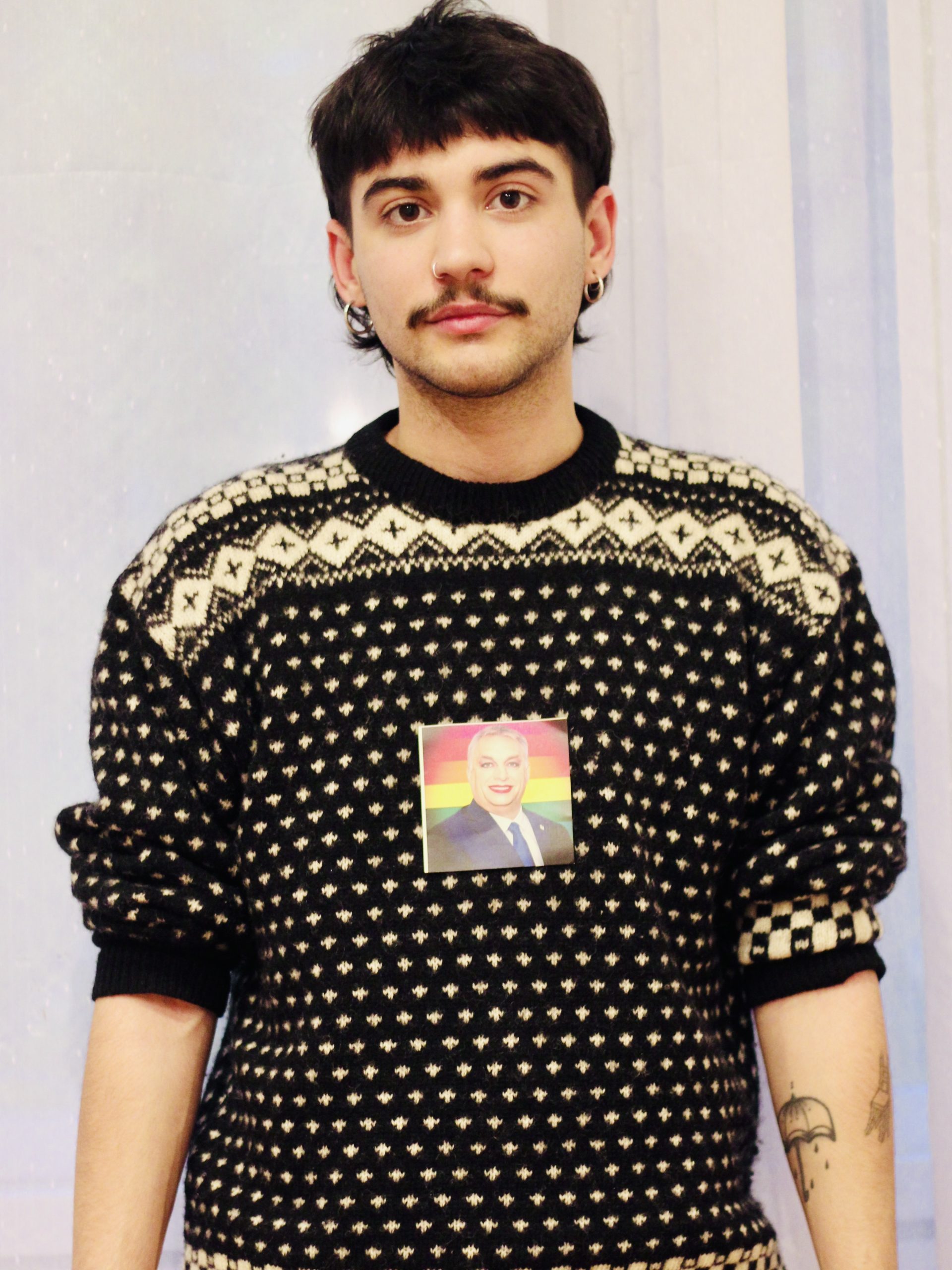
When I think back to that period, it does not appear before me as a story, but as a mood. The image of a long, poorly ventilated room returns again and again, the light is never fully daytime, but not darkness either, rather a tired twilight rests on the objects, just as on the skin of the people. The sounds are not sharply separated from one another either. The deep hum of the radiator blends into the steady breathing coming from the other bed, and the whole room seems to breathe as if it were a single body.
The light of my phone was the first reliable point. I kept it under the blanket, as if it could be hidden. Its cold blue color lit up my face and always drew the same overly sharp outline. I felt this contour even during the day, only then there was nothing in which it could be reflected back.
There were six beds in the room. Six bodies, six separate rhythms. Yet there were not six separate worlds; rather, we were a single overheated organism in which everyone tried to sleep, while something else was also happening beneath the surface, continuously and almost imperceptibly.
Back then I did not yet know exactly what I was looking for. Not a name, not a concept, not a system. Only that rare coincidence when inner experience and spoken word do not immediately cancel each other out. By then I had already grown used to the fact that what is said about me and what I know about myself are two separate realities. Occasionally they meet, but they never fully overlap.
At home the world stood before me as a finished structure. Family roles were cast in concrete, like the rituals of Sunday lunch. Above the hot soup the same expectations repeated again and again. Christian, far-right order. The body had a predetermined meaning from which it could not step out without consequences. Everything had its place, every deviation counted as a mistake.
Connection often took the form of discipline. A proper girl does not do that. Eat nicely. Don’t speak badly. These sentences were said so often that they almost became part of the air. Behind them, however, there was always a vibrating, unspoken tension that the rules could not cover.
In the dormitory this order did not disappear, it only took on another form. In my surroundings I encountered the manifestations of bodies the same age as mine: growth, hormones, poses, shifting moods. Yet I always seemed to arrive a half beat late to every situation. It was not a visible difference, rather a small misalignment. A laugh that comes a moment later. A movement that does not immediately find its place. It felt as if my body were constantly lagging behind the point where it was supposed to be.
The recognition did not burst in; it seeped into my life slowly. On forums, in articles, in blogs, in the sentences of strangers I found that previously unknown mode of speech in which I was still recognizable. At night, in the bluish light of my phone, it was not the information that mattered, but the fact that there existed a language in which the previously unnameable could still be spoken. Even if only through other people’s stories. As I read more and more of these texts, something no longer came from outside; rather, it was as if what had been silent until then was slowly given a voice within me.
I remember the evening when I first read about the possibility of official name and gender change. Nothing dramatic happened, nothing revelatory; rather, an invisible passage suddenly opened where I had previously seen only a solid wall. From that moment on, I knew that my situation was not unchangeable, as I had previously thought.
I was fifteen when I first spoke about this with my mother. She did not reject it, but first tried to interpret my experiences through her own framework, trying to reduce them to familiar categories: she called it a boyish phase, an in-between, growing up. She spoke as if every deviation I experienced were only a slightly shifted version of a known story. But her story could eventually fold back into the frame of a female life, whereas mine found no such possibility of folding back—not because we did not try to describe it with the same words, but because something always remained outside those words, and this remaining outside gradually became permanent.
It was summer, hot and motionless air hanging above the streets, when the Pride march moved through the city. In the dense mass of colors, sounds, and bodies, people did not appear as separate faces, but as a single moving, pulsating surface in which heat and attention were simultaneously present. Embedded in this density, a woman/someone threw eggs toward the crowd with repeated, targeted movements, not randomly, but persistently: the repetition itself was the point, not whether she hit anything. Her face appeared and disappeared in the crowd, assembled from fragments, then fell apart again. It was my mother’s angry, hate-filled face. Sometimes I saw it, sometimes I lost it; her throws briefly disrupted the rhythm of the march, opening small gaps between bodies. The crowd reassembled, yet something still did not fully return, because the threatening realization appeared that the cohesion of the march could be broken at any moment.
What happened afterward I did not experience as a turning point, but as a slow shift. My mother used the same words, but behind her sentences something gradually faltered; the previously stable categories no longer held the world together in the same way. First she only asked questions, cautiously, then more and more often read texts that would previously have been foreign to her, and in these writings she was not necessarily looking for confirmation, but rather for footholds with which she could reposition herself in a space that was no longer entirely the same as the one she had started from.
There was a moment at a Pride event when she was no longer on her previous side, but somewhere at the edge—not crossing from one world into another, but rather stuck at the border of two worlds. This in-between state did not dissolve immediately; the earlier rejection did not disappear entirely, but it was no longer exclusive, rather a remnant of an older reflex. A different kind of attention began to form in her as well, still uncertain, but no longer reversible.
Later we always went to demonstrations together, two bodies in the same urban space. The air itself acquired a political quality; the sentences spoken in the street did not remain there but seeped back into movements, into the rhythm of walking, into glances, and the city became simultaneously background and medium, with posters, news, slogans that did not function as separate messages but as continuously present noise, densely interwoven with everyday perception.
I remember a tram, the cold glass surface, the moving city on the other side of the window, and that overly dense sentence that appeared on a phone screen: “No Migration. No Gender. No War.” This did not function as a message coming from a specific device, but rather as a kind of uninterruptible background noise coming from space itself. At that moment, “No Gender” did not stand before me as a concept, but as a closeness that suddenly wrapped around my own body, as if language had short-circuited.
Meanwhile hormones acted slowly, almost imperceptibly, not as events but as continuous presence; a different rhythm was added to the existing one, just as the change in my voice did not happen in a single moment either, but as a series of shifts in which the same body began to carry different emphases, as if the structure had not changed, only the material in which it continued to operate.
The greatest change was not even this, but that constant vigilance, self-monitoring, the continuous replaying that had previously been present before and after every movement, slowly lost its urgency. It did not disappear, but it no longer directed movements in the same way. This kind of silence did not arrive as relief, but as strangeness, because after the long inner noise there was suddenly too much space left, in which there was no longer the same compulsion to check everything in advance.
Later I went to an art university, and in my art I have been trying to capture this constantly forming, never-closing process ever since. In my diploma work, folk motifs, queer experience, and the materiality of the body do not merge into a unity; rather they are placed next to each other, rubbing, contradictory, and the armor I made based on the imprint of my pre-surgery chest is not a souvenir but a presence, which does not explain but holds back, and where time does not close but remains in layers.
The bluish light of the dormitory phone and the later aluminum armor seem to carry two different states of the same time: one does not yet know exactly what it will become, only seeks the surface on which it can be reflected; the other is already present as something that has happened and cannot be reversed. And between the two stretches everything that until then could be called—or I called—family, body, language, and world.
The family, where order was simultaneously stable and cracked, in which sentences often concealed more than they revealed, and in which the mother’s slow shift toward another kind of attention did not appear as a single decision, but as a series of small, almost imperceptible rearrangements, where the earlier rejection did not disappear entirely but no longer determined movements in the same way, and in which eventually what happened was not a transition from one world into another, but that the world began to become more complex for her, and in this complexity there was no longer a clear boundary along which everything could previously be separated.
Meanwhile the city did not remain background, but became a medium that continuously reacted back, because the sentences spoken in the street, on posters, on phones, in the news, did not remain outside but slowly seeped back into movements, into bodily posture, into glances, and this seepage did not happen as a visible change, but rather as a slow impregnation in which the boundary between language and body became increasingly unstable.
There was a moment when it was no longer possible to say precisely where one’s own thought began and where something coming from outside continued, and this was not a liberating state, but rather one in which former reference points gradually lost their firmness while new ones had not yet fully formed, and in this in-between state every movement became slightly uncertain, yet still continued to be possible.
In the end, the work did not appear as closure, but rather as a recording of a state in which folk motifs, queer experience, and the materiality of the body did not merge into a single meaning but remained next to each other, rubbing, and this friction did not resolve but remained visible in the material, in which form and experience did not cover each other but continuously indicated their difference.
And in this layeredness, the armor also did not become memory but presence, an object that does not interpret but simply exists, and in which a previous state of the body does not disappear but remains as an imprint, while the present body lives according to another rhythm, and between the two there is no sharp boundary, only transitions that do not fully close but continue within the one who carries these layers within themselves.
9
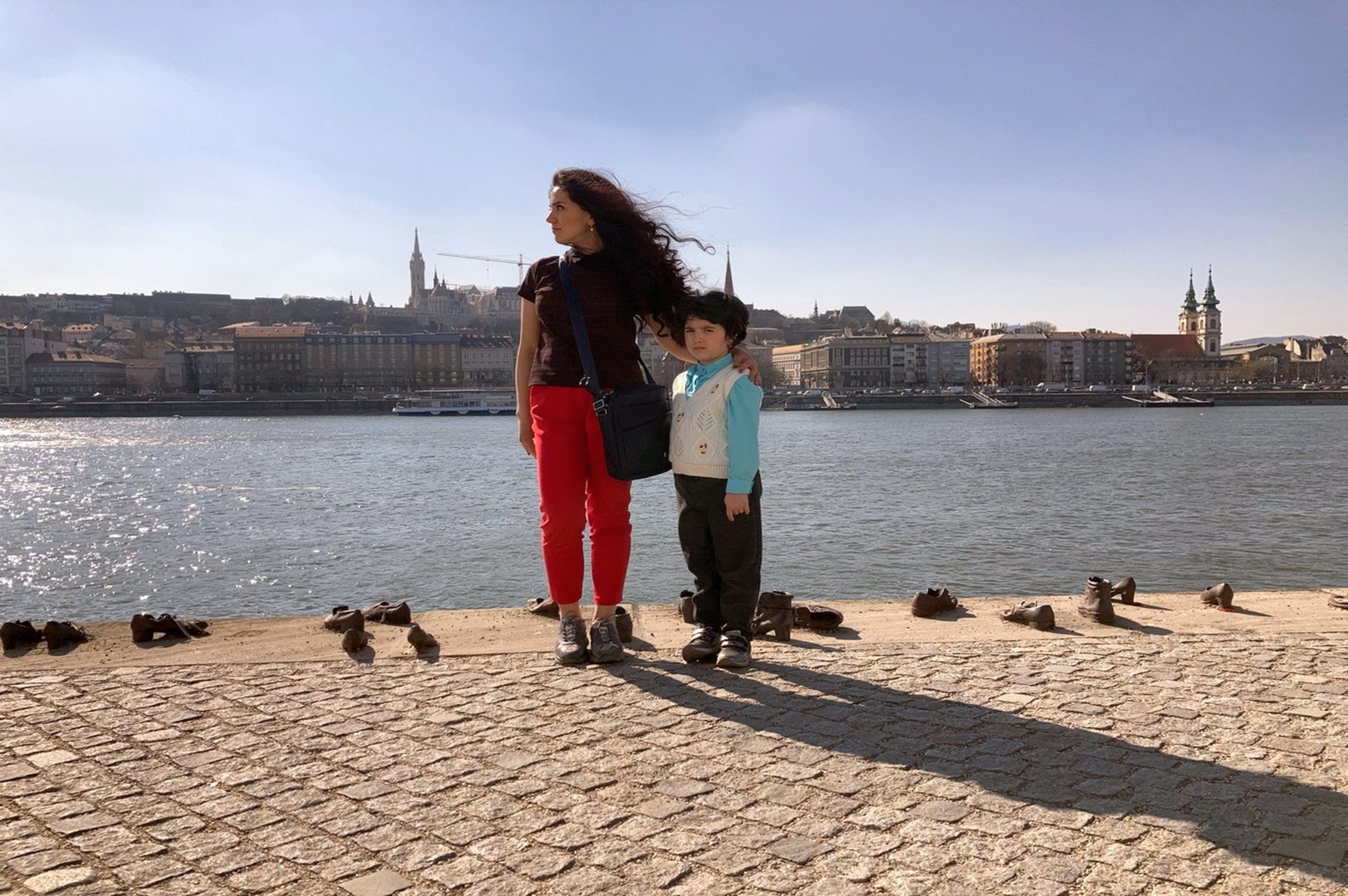
There is a Bosnian film called The Snow about a village where, after the war, no men are left. I saw it many years ago, yet I still think about it often. Not so much because of the story itself, but because of the images: women who wake up in the morning as they always have, draw water from the well as they always have, knead bread and feed the animals as they always have, while the world on which they built their lives has vanished around them.
War stories are usually about the front lines, the soldiers, the trenches, the rockets. Yet war is often more about what remains afterward. About the women. The grandmother, the mother, and the granddaughter. The sick grandmother who needs care. The mother trying to keep working. The granddaughter who learns far too early that sometimes someone else needs looking after more than school does.
When you have children, whatever happens, you have to find a way through. Perhaps that’s all there is to it. War does not ask what you are capable of. It simply places its weight on your shoulders, and the next morning you still have to get up. In this war, hundreds of thousands of Ukrainian women are living like this in foreign countries, alone and dependent on no one but themselves. I am one of them.
I am thirty-one years old and the mother of two children. I had a single day to decide that we were leaving.
I remember that day as though it happened to someone else. The Russian army had begun bombing the neighboring town. Until then, somehow everyone believed it could never happen to us. That war was something that existed in the news, a few centimeters away on a map, but not on our own street.
And then suddenly it was there.
One suitcase and a few duffel bags. It is a strange thing to pack up a life. You realize how little of it actually fits into a suitcase. Clothes. Children’s things. Documents. Everything else stays behind. The books. The photographs. A favorite mug. Coats hanging in the back of a wardrobe. A tree visible from the window. The smell of home. All the things you once assumed naturally belonged to you. Sergei Dovlatov wrote a great deal about this in The Suitcase.
I told my children we were going on vacation.
I don’t know whether they believed me. Perhaps they did; perhaps they didn’t. They had no choice. I watched them trying to stuff their favorite toys into the bags, and I kept thinking that only a few hours earlier we had been the same people we were the day before. We lived in the same house and made plans for the following week.
By evening, we were refugees.
I told the children we would probably be staying for a long time only after we had settled in somewhat, after I could see them playing, laughing, and no longer crying every night before bed. By then my husband had already received his draft notice.
Since then, the internet has become the only connection between us. I once thought it impossible that an entire day could be determined by a single message. Now, sometimes two words are enough to carry me through an entire day.
Yesterday there was a missile attack. For hours I couldn’t reach my husband. I sat with my phone in my hand, staring at the empty screen as though sheer willpower could summon a message.
Eventually it arrived.
“I’m okay.”
That’s all.
Two words.
Enough to give me the strength to get up again the next day.
Every day is a process of starting over. I wake up each morning with no idea what news the afternoon will bring. Every Sunday I come up with some activity for the children. Nothing major. A walk. A playground. Ice cream. A day trip. Things that would seem insignificant in a normal life have become lifelines for us now. I want them to remember more than just the war when they look back on this time.
Finding work turned out to be easier than I expected. Because of labor shortages, companies approached us themselves. We were invited to work in paper mills, automotive factories, and hotels. Some employers even offered accommodation. It was strange to see lawyers, language teachers, veterinarians, and schoolteachers all competing for the same minimum-wage jobs.
I am a teacher myself. Or perhaps I was. Sometimes I say the word silently to myself, as though that might make the woman I was before the war feel more tangible.
The hardest thing is not the uncertainty but the homesickness.
Our neighbors regularly send photographs of the village. Streets. Gardens. Houses. Never my house—not once. They never say it outright, but I can feel that they are trying to spare me. That they know something I don’t.
I don’t know whether our house near the front line in Kharkiv Oblast is still standing. I don’t know whether the roof is still there. I don’t know whether any windows remain. I don’t know whether it exists at all.
All I know is that there is no electricity and no heating.
And yet there are days when I long for home so intensely that it feels like physical pain. I want to see my husband. The street. The garden. The walls. Anything from the life I left behind overnight.
My seven-year-old son, Leo, is always somewhere beside me in this absence.
He asks far more questions about home than I do. Sometimes over dinner. Sometimes before bed. Sometimes completely out of the blue. He asks whether our house is still standing. What happened to the garden. Whether his toys are still there. Whether the neighbor’s dog remembers him.
He asks questions no one can answer.
He hates the war. He hates Putin. He often says that Putin must be stopped. He says it so seriously that sometimes my throat tightens. He is still a child, so he believes that every bad thing can be traced back to a single person, and that if that one person is stopped, everything can return to the way it was before.
I do not argue with him.
Let him believe a little longer that the world is more understandable than it really is.
He does not really want to learn Hungarian, either. He resists it. Stubbornly clinging to Russian, his mother tongue, as though the language itself were the last remaining fragment of the life he lost.
His father’s voice.
His grandparents’ voices.
The schoolyard.
Home.
A world he refuses to believe may no longer exist in the same way.
In Leo’s mind, this is not our life. It is only a long wait, a temporary stop along the way. He is convinced that one day we will go back. That his real life is there, not here.
Sometimes I listen to him talk about it, and I cannot decide whether I hear hope in his voice or grief.
Perhaps they are the same thing.
Meanwhile, I try to live in the present. I work. I cook. I take care of my mother. I take care of my children. I try to act as though life is still what it used to be.
Only sometimes, late in the evening, when everything has finally fallen silent and I don’t have to take care of anyone for a few minutes, I think of the village.
The thirteen houses that were bombed.
Or sixteen.
Sometimes I no longer remember exactly.
But that isn’t what matters.
What matters is that inside every one of those houses there was a table around which people gathered in the evenings. A wardrobe full of clothes. A child who grew up there. Someone who closed the window before bed, switched off the light, and believed they would wake up in the same place the next morning.
And then one morning, home was gone.
Only the memory remained.
And the hope that one day there will still be somewhere to return to.
10
The first light of day glistened damply on the canvas of the yurts. In the mornings, the fog had not yet lifted from the valley; the night had not completely passed, but had merely retreated slightly behind the trees. Seven yurts stood side by side, not in a regular pattern, but rather as the silence between the hill and the people allowed, for there were indeed unspoken hierarchies, family tensions, and petty, unresolved grievances that were just as much a part of the camp’s fabric as the stretched ropes or the discolored earth around the fire pits.
We moved to the Őrség region. We wanted to break away from the consumerist world. We had yurts shipped in from Mongolia. We had horses and goats. I baked bread in a wood-fired oven. People referred to us as the “seven yurt families,” and we were even featured in a news report. Back then, I thought we had found the right way to live.
Every morning, I was the first to wake up—or at least I thought I was—because in reality, everything was already happening even before I woke up, just more quietly: the clopping of the horses’ hooves, the goats’ impatient scraping, the wind rustling the leaves on the trees. When I stepped out of the semi-darkness of the yurt, I was always greeted by the same moment—that brief, almost imperceptible transition between the warmth inside and the cold outside, during which one hasn’t yet decided exactly who one is on that particular day.
My husband’s family regarded this world as natural, as if this were the only way to live, as if modernity were merely a brief disruption in history that could be corrected with good customs, a wood-fired oven, communal prayer, and that confident, almost arrogant way of speaking in which there is an answer to every question—even those for which there really isn’t one.
For a long time, I didn’t ask any questions in return, because questions were not only unnecessary among them but also suspicious. A person commits a deliberate act of disorder through their uncertainty. Slowly, I learned to live by silencing my own doubts. The sermons in church and the evening conversations gradually coalesced into a single language. In this language, doubt was not a thought but a weakness that had to be concealed, and I began to think in this language without even noticing that my own sentences were becoming increasingly rigid.
There was always a peculiar acoustics among the yurts. Sounds didn’t travel freely but bounced off the canvas walls, which made every conversation sound a little distorted. Even one’s own words would come back sounding strange. Perhaps that’s why I so easily came to believe that what we said there wasn’t just a simple opinion, but part of a larger order. White is white, black is black, family is family. A woman and a man make a family. Period.
During the camps, the hillside filled with people. At first, the children arrived timidly, but they quickly made the space their own. They ran through the grass, leaving traces that vanished by evening, but their movements lingered in the air, in the dust, in the touch of objects. During riding lessons, the same scene always played out: at first they were afraid of the animal-its body was too large compared to the proportions they were used to-but then they slowly realized that the fear didn’t lie in the animal, but in their own lack of balance, and when they understood this, a still-shy confidence flashed across their faces.
My oldest child-whom I still thought of as my daughter back then-always moved differently from the others. He didn’t rush or fumble; instead, he paid close attention. Before every movement, he weighed the gravity of the space, and when he sat by the fire, he kept his hands on his knees for a long time, as if he weren’t sure he had the right to be there. I saw this restraint as a peculiar sensitivity, something that might one day be shaped into art.
Meanwhile, the anger that had until then been merely whispered about around me took on an increasingly concrete form. The line between “us” and “them” grew sharper. The same voice that spoke in church and around the dinner table at home was now speaking about Pride, about gay people, about the world. And I didn’t realize that this language was already speaking within me as well.
My children were growing up, and I thought this growth was a transparent process-that with each passing year, I was getting closer to understanding them. In reality, it was only my own assumptions that had become more entrenched, while they were drifting further and further away from the image I wanted to hold of them.
The metal barrier was hot in the July sun. When I touched it, I instinctively pulled my hand back. Not because of the pain, but rather because the whole thing suddenly became real. On the other side, people were marching; people I didn’t see as people at the time, but as symbols. A few minutes later, I was shouting along with them. Filthy fags.
It happened nearly twenty years ago.
On Pride Day, the city was like an over-testosteronized bodybuilder, bulging with rage, who could explode at any moment. The air was thick with a mixture of sweat, shouting, and a kind of nervous anticipation. We were squeezed between police lines, we were hit with tear gas, and the crowd was both angry and enthusiastic—and at the time, that seemed completely natural. I believed that seeing a parade like that could make someone gay. That my own children might be inspired to do the same. I thought the whole thing was a provocation, that these people simply wanted to shove their lifestyle in our faces. I don’t remember exactly what I chanted, but I do remember clearly that the phrase “filthy fags” came out of my mouth. There was no deliberation, no thought behind it. just a smooth blending into the chorus of the others.
There were people on the other side, but I didn’t see people-I saw symbols. An ideology, a threat, an enemy. The individual disappears into the crowd, replaced by a general image in which every face is a variation on the same thought. On the tram ride home, none of that certainty remained within me. Only my body remained; I sat wearily by the window, and as the air around me slowly cooled, I felt as if the city had taken back everything I had temporarily let go of at the barricades.
Yet I didn’t grow up hating anyone. I came from an ordinary rural family, but I simply didn’t have particularly strong role models. I drifted for a long time, and then I met the father of my children, who came from a nationalist Christian background. A large family, traditions, shared holidays, a firm set of values. To me, that meant security at the time. I saw in it a stability that I had been missing in my life until then.
I went to church with them. There, we were told that being gay was a sin. Anti-Semitic remarks were a regular part of our conversations around the dinner table. The world was divided into two camps: decent people and those who posed a threat. At the time, I didn’t realize how simplistic that way of thinking was. If anything, it reassured me.
When my – at that time – daughter first tried to talk to me, she stumbled over her words several times. I could tell she wanted to say something, but she couldn’t get the words out. Finally, I said it for her:
“Are you trying to say that you’re attracted to girls?”
She nodded.
I told her it was no big deal.
I wasn’t happy about it, but it wasn’t the end of the world. Only a tiny internal sound had changed, like when a barely audible part in a machine starts operating at a different rhythm.
Then came the next sentence.
She said she was transgender. She feels like a boy. It hurts her terribly that she was born in a female body.
At that point, my old way of speaking wasn’t enough anymore. I said it would pass. She’d grow out of it. I didn’t like my own body either. I was glad hormone therapy couldn’t start right away, because I thought that as time went on, she’d change her mind.
But she explained that what I was talking about wasn’t her reality. She presented arguments I couldn’t refute. It was clear that by the time she’d reached this point, she’d read everything, thought everything through, and asked herself every possible question.
That’s when my own learning began.
It didn’t happen all at once; instead, a series of small, uncomfortable shifts awaited me: lots of reading, questions, misunderstandings, arguments… Sometimes I got tangled up in the concepts, but he always had a well-prepared answer. After each of these moments, the tight grip that had held my world together until then loosened a little.
Meanwhile, of course, the guilt set in. What did I do wrong? Is it because of the divorce? Because of how I raised them? Because of genetics? According to my ex-husband, it was clearly my fault. It took me many years to understand that I shouldn’t be looking for reasons, but rather standing by her side.
And there was an even more painful realization. That my child didn’t dare tell me for years what was going on inside. He suffered for two years. He was anxious for two years. His dysphoria even manifested as self-harm, and I didn’t notice a thing. I often think back to that moment when I looked in the mirror and asked myself: what kind of mother was I?
By the time my second son came out as gay, I was in a completely different place. By then, I’d begun to see this community from the inside, and I realized that the world I’d feared was actually much more humane than what I’d previously believed.
Many people ask what kind of propaganda my children might have been exposed to. None. We didn’t have a TV. We didn’t know any LGBTQ people. What they heard was our “gay talk” at home. Yet they turned out the way they did.
That’s when I finally understood that it doesn’t matter at all how you raise your child, because that’s not what makes them gay or trans.
At the next Pride parade, I was there as a supportive parent. I cried my way through the whole thing. The city was the same, but every surface reflected a different light, as if new layers had been deposited over the old ones. When I held my child’s hand, I didn’t feel an idea: I felt a person. A body that is just as uncertain in the world as any other.
Even today, I accompany Oli to the doctor, to government offices, and to the bank. He’s twenty-three, but I won’t take the risk of leaving him to face humiliation alone. When people see him as different from what his documents indicate, he can easily come under attack. Law 33 took away the possibility of a name change from him and many others in his situation. They have to explain to strangers why a woman’s name appears on their documents. It’s getting harder and harder to access hormone therapy, which is why many travel to Vienna. There are few specialists, the waiting lists are long, and so many are left completely on their own. Many are not hired, many are disowned by their families, and many are kicked out of their homes. And I can feel their fear in my own body.
At the same time, I also see that this younger generation thinks differently. Among Oli’s friends, the first question isn’t about someone’s gender. They treat each other much more freely and humanely.
My children, at the same time, preserve tradition just as we do. They can ride horses, have done folk dance, and played the citera. In Oli’s art, the tulip motif and trans identity coexist. The two do not contradict each other. They never have. It just took me a long time to understand this.
I often dream that one day I will organize a tradition-preserving camp for LGBTIQ people. With horses, campfires, folk songs, and archery. A place where no one has to explain who they are.
I currently attend ELTE (Eötvös Loránd University), studying social administration; this is my graduation year. My children pushed me to finish it. I increasingly think about what else could be done for them, how their lives could be made safer, and that perhaps this degree could open a few doors.
By now I have become braver. I care less about what people think of me. If someone makes a snide remark about my rainbow shirt, that is their business.
The hillside is the same today as well. The grass grows the same, the stones still warm up by the afternoon, and when I close my eyes I still see the yurts in the mist, the horses, the fire pits, the mornings when I believed the order of the world was simple and final. Today I know that neither the mist nor people are like that. My children grew out of the same landscape, learned the same songs, rode the same horses as anyone else, and yet became who they are. Sometimes I think my task was not to protect them from the world, but to stand beside them when the world turns against them.
Because when I walk next to my son at Pride today, I no longer see labels.
I see people.
11
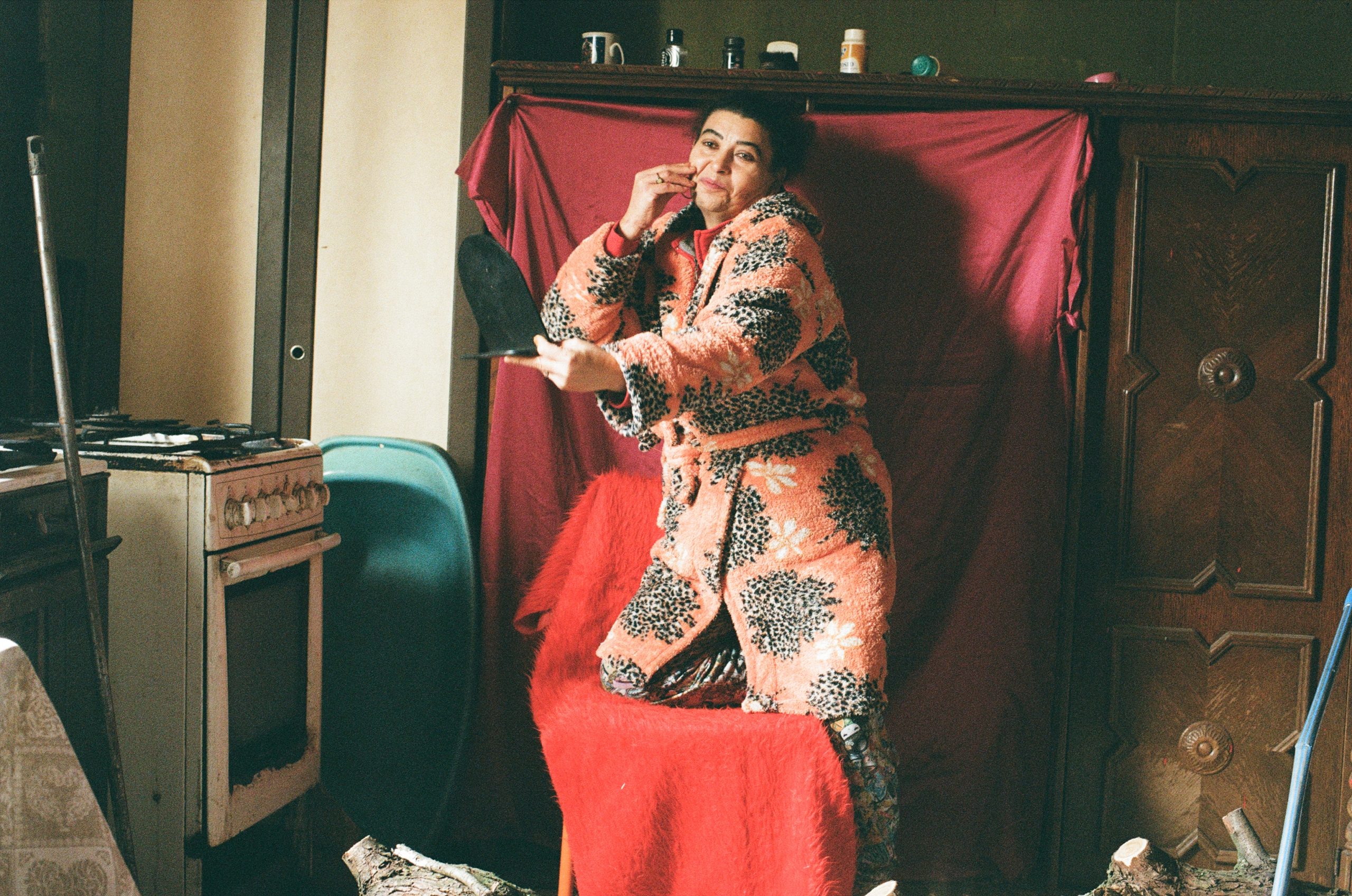
My father always said: don’t ever think that anyone cares about what happens to you. His voice lingered on the kitchen wall, where the soot had settled. I got used to the idea that I wasn’t important. A boy is a child. A girl doesn’t count.
I’m from Tiszakarád; I was born in 1966. Our home in the countryside became uninhabitable; my husband beat me and my children, and my children were in danger. We fled. The dust from the road stayed in the seams of our shoes for a long time. I came to Budapest hoping to find a place at the shelter for mothers, but unfortunately, they tend to admit those who are registered as residents of Budapest to the shelter. I waited at the gate just like everyone else. I’ve been living here for ten years, in this little forest, in this dilapidated house. The plaster falls off every day. By morning, white specks cover the floor and get caught in the folds of the blanket. You can’t sit on the bed because of the bedbugs. The mattress has a life of its own. There’s no heat, no water, no electricity. At night, the darkness doesn’t gradually set in—it’s just suddenly there. We go to a nearby homeless shelter to charge our phones and take a shower. Instead of an extension cord, our feet carry the electricity back and forth. My children can’t come here with me. There are rats, and bedbugs have recently appeared as well. At night, you can hear the rats scratching. Sometimes even the silence starts to scratch. The situation is unbearable.
I have two daughters, and my sister has three children in foster care. There was a time when we lived in a rented apartment. In the end, they took the children away from me from that apartment. We lived in a very tiny apartment—nine of us, including seven children—because my sister had broken down, and they were living with us too. At night, we laid our heads side by side. The edges of our blankets touched. The air in the room ran out, and the window was fogged up by morning. There were just too many of us, and we couldn’t find a bigger place, so they took the children away. After that, for a long time, I couldn’t close a door without seeing them right in front of me. Back then, I worked nights cleaning a shopping mall, but the money wasn’t enough for anything. By the time dawn broke, the smell of mop water had seeped into my skin. The marks from the rubber gloves were still there on my wrists even in the afternoon.
Mirror, mirror, tell me I exist. I am a woman. I am a mother. I am a human being. I am a woman.
I’m from Borsod; I have six children and ten grandchildren. The oldest has already gotten married. They live in the countryside. I had a life I wouldn’t wish on anyone. After the maternity home, I finally ended up here in the forest. In the spring, the branches close in over the house. In the fall, the leaves cover the threshold. The wind finds its way in before anyone else does. Every season knows when it’s time to arrive. I wake up in the same place. I am a woman. I am a mother. I am a human being. I am a woman.
I’ve been living in the forest for ten years. I’d like to get a proper, clean bed as soon as possible. We carry water from the fire hydrant; the handle of the jug cuts into the palm of my hand. In winter, the metal sticks to my fingers. We go to the warming room in the living area to do our laundry. The wet clothes dry on the chair, but they’re still cold by morning. There we get sanitary pads and toilet paper if we need them. It’s not easy for us here. The days pass without electricity or lighting. When the sun goes down, the corners of the room disappear first, then each other’s faces. We look at each other and talk. Our voices stay with us longer than the light. There used to be a generator; we could even watch TV. The blue light from the screen filled the room. Back then, the evenings lasted longer. We partied a lot here. Now it’s just me, Dóra, and Melinda. Even if we were to get an apartment, we’d have to do it on our own, because most apartments need renovating. But we don’t have millions to renovate anything on our own. So we have nothing but this dilapidated house. When it rains, we place one container after another under the drips. Each drip comes from a different spot. By morning, the floor is covered with them.
I’d like a man. Or a woman. Someone I can snuggle up to. Someone who has a nice house. Where it’s warm. Where the windows fog up in the morning. For Christmas Eve, I’d like a man who doesn’t drink or do drugs, who works, and whose job it is to take care of me—to wait for him to come home with a bath ready, to stand by his side. I’d love him, and he’d love me. Love, too, needs a place to rest at night.
We were together with Ráncos (Wrinkled) for eleven years. We met at the community center. It was a Saturday night; music was playing, and everyone knew everyone else. We had four children in all—three girls and one boy. He was a really good man. We struggled together to raise our children. He worked tirelessly. His hands always smelled of work. By evening, dirt had caked under his fingernails. My son was one year old when Ráncos died. It was October 31st. A car accident. Everyone in the car died. In a single evening, the house fell silent. After that, I was alone with four children for three years. My youngest daughter waited for her father to come home every night. She would look toward the door. She’d hear every footstep on the street. Her father adored his children. He came home with a gift every day. Sometimes it was just a piece of chocolate, sometimes a bag of candy. It didn’t matter to the children. No matter how much I love my children, I can’t give them a father’s love.
We lived in Borsod. Back then, we still had a beautiful apartment there. From the window, you could see out into the courtyard. Then my mother became paralyzed, and I took care of her. There I was with four children and a sick mother, without a job or any money. I lit the fire in the morning and put it out at night. The days just passed by. We struggled and worked—in the tobacco fields, everywhere. The sap from the tobacco leaves dried on our fingers. By evening, our backs ached so badly that we could barely stand up straight. But we weren’t getting anywhere, so that’s how we ended up in Budapest. Some acquaintances told us they knew of a place to rent there. Everything we brought with us fit into a plastic bag. I’ve had pneumonia three times and suffered a heart attack. I’m forty years old.
I met a man in Pest and lived with him for eleven years. I did everything for him. But he cheated on me with my cousin. I gave birth to two children with him; one of them has severe diabetes. I basically raised all six children on my own. I worked as both a man and a woman; I went out to work at night. I cleaned offices and theaters, and washed dishes, just so we’d have a little money. By dawn, the smell of mop water had soaked into my clothes. Every night, the bucket would bump against my legs in the hallway. Later, we were evicted from our rental apartment. The door slammed shut behind us. That’s how we ended up in the woods—because it was still better than the street. There were no doors or windows; it was winter. The wind blew right through the house. In the morning, we could see our breath. I’ve been here for ten years. For ten years, I haven’t been able to get out of here. In poverty and suffering, without electricity or water. With a seriously ill child. All day long, we wonder how we’ll survive. Even though we have eyes, there’s no electricity, no light—we can’t see. When it gets dark, first the objects disappear, then each other’s faces. There are bedbugs, there are rats. At night, we hear scratching coming from the wall. Even so, we do everything we can; we cook every day. Condensation gathers under the lid. The steam rising from the pot fills the room. It makes it a little warmer for a while.
But God could at least give us a little light.
12
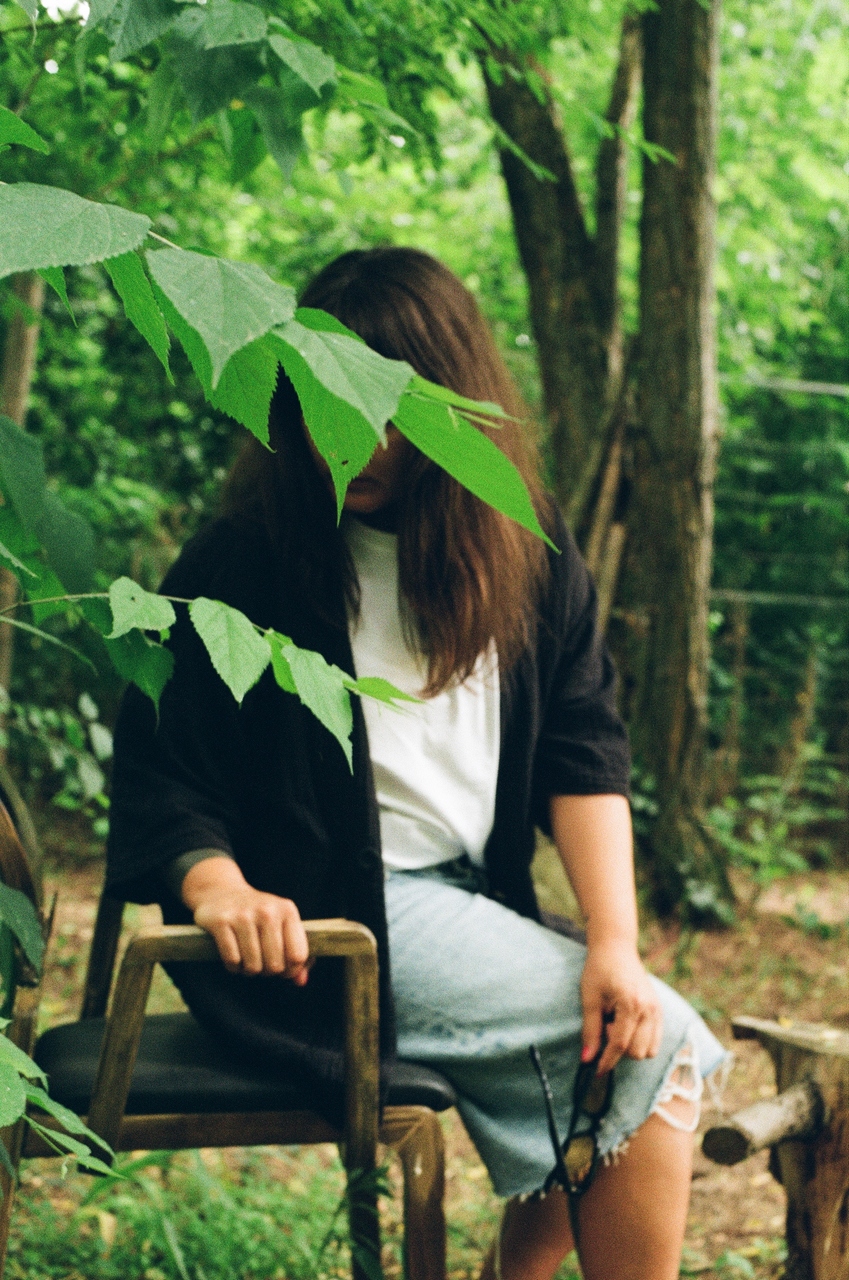
It’s not just difficult to be a woman in a democracy, a dictatorship, in slavery, or in freedom. It’s difficult to be a woman, period. A woman’s existence is like a clothesline stretched between two crumbling walls: it both holds you up and cuts into the palm of your hand. You can’t let go, because then everything will fall off it. On cold mornings, frost settles on it; in summer, it heats up in the sun, but its weight never changes.
As a single, forty-year-old woman, I receive no government assistance whatsoever, nor do I get any tax breaks, even though I’m the one who pays the most in taxes and yet gets the least in return. The whole thing is like a worn-out customer service waiting room: neon lights, plastic chairs, a number in my hand. The system has no face, only a rubber stamp. Every morning it puts the same gray, dusty coat on me; one whose pockets are always empty, yet is still heavy to wear. They constantly berate me for not being a “real woman” because I haven’t given birth. They drape over me the dusty blanket of social expectations, which reeks of old mothballs, and no matter how much I shake it off, it falls back on me again and again. They expect me to value the nation’s future more than my own life, as if my body were public property over which others can write the instructions for use. They treat me like a child. They talk to me as if I were a child who doesn’t yet know how to tie his shoelaces. It’s as if my decisions were written in pencil, so that someone could lean over me with an eraser. It’s as if I were a mannequin forgotten in a store window, dressed by others each evening and returned to the same motionless pose each morning.
When I step out the door of my apartment, the world doesn’t open up before me—it closes in on me instead. I step into a long hallway where the same question seeps out from behind every door. At every turn, stereotypes block my path: hard, rough stones on the poorly repaired sidewalk of a run-down city. You stumble over them, and after a while, you no longer know whether the stones are in the wrong place or you’ve simply learned to walk wrong. Why am I not feminine enough? Why am I so tough? Why do I have such sharp, decisive opinions on everything—opinions that flash like blades? These questions aren’t born of curiosity. They aren’t open doors, but rather tiny pinpricks: barely visible, yet by evening, your body is full of them. People rarely ask a man, “Dude, why are you so strong, why are you so ruthless?” Strength is a coat on him; on me, it’s an indictment.
I grew up in Subotica, in Vojvodina, a dusty town bleached by the sun, where the summer heat settled on the houses like a heavy, scorching blanket. The plaster on the walls was cracked, old fruit trees stood behind the fences, and all the while, history kept knocking at the window. I was in elementary school during the South Slavic War, and I was fourteen during the bombings of Kosovo. My childhood wasn’t spent in quiet rooms, but amid a constantly vibrating, anxious background noise. Politics wasn’t some distant thing on the television screen; it sat there with us at the table, mingled with the aroma of Sunday lunch, and lingered among the newspapers left on the kitchen table. History was a poorly tuned, crackling radio that no one could turn off. Politics wasn’t a backdrop, but a narrow frame. Like an old window whose sash can no longer be opened properly: you look out at the world through it, but you’re always separated from it by the same cracked glass.
My background and my identity as a woman made for a difficult start, and so my life became a narrow, bumpy, constantly lurching obstacle course. There is no society where there is complete equality, not even in Sweden, but there are places where political instability doesn’t weigh so heavily on people, doesn’t fill their inner spaces to such an extent. This deafening background noise is growing ever denser in Hungary too—a constant roar that prevents me from hearing or seeing anything. I am a single, forty-year-old woman, and little by little, the future is beginning to look like a narrowing, austere, bureaucratic corridor stretching out before me. Rules on the walls, locked door handles: no tax breaks, no government assistance. And then there’s that phrase: “You’ll be too old for a loan.” A cold, stamp-scented phrase that lingers on the edge of every piece of paper, on the back of every official letter. I pay the most in taxes, and I get the least back. The numbers are in order, the spreadsheets are neat, but behind them is a person who carries home the same heavy burden every month.
The same distorted, unspoken order operates in the workplace as well. I’m made to work the hardest because I don’t have children, because I’m single, because “I have time anyway,” because I don’t have to rush to preschool at four o’clock. In the eyes of others, my time has become a shelf of freely available resources from which anyone can take something.
Meanwhile, others’ lives are protected by a gentler, more accepted social framework. In many places, a mother who leaves work to pick up her child is held in higher regard than someone who goes to work even when sick because they don’t dare to take time off due to illness. The fever stays in the body, the medicine stays in the bag, and the desk awaits the person just the same in the morning. It is an ever-present, silent, stinging injustice. It is neither loud nor dramatic. It lurks between the lines, in work schedules, in small decisions.
I experienced the war as a child. The period between 1993 and 1995 was the hardest. I remember the anxious adults with gray faces, the conversations cut short, the hushed voices. There was always an unspoken weariness in them that a child cannot yet name—only a sense that the air around them was heavier. Back then, all I could see was that my family was slowly falling apart financially. I didn’t see the dense web of efforts, struggles, and tiny survival decisions behind it all. I didn’t see the bills on the table, the calculations in the kitchen, the quiet re-planning day after day.
My mother had to be incredibly creative. She had to learn to make ends meet even on thin ice. She had to make decisions in situations where the logic of survival overrode the boundaries of legality and “normal life.” Looking back, the women there functioned as tough, persistent, invisible heroes. They weren’t immortalized in statues, and no books were written about them. They carried grocery bags, counted money, raised children, and started over the next morning. If you have children, you have no choice: you have to make it work, no matter what.
No men in our family were taken away to serve in the military, so I never experienced what it’s like when your husband is drafted, taken away, and you’re left at home in that uncertain, empty, cold state of waiting. Sitting by the phone. Staring at the door. Watching the news. Not knowing if he’ll ever come back. This is another, deeper, more difficult layer of war: when the weight of the entire world falls on women and children. This is also the subject of the Bosnian film *Snow*, in which an entire village is left without men because the men are taken away to serve in the military or simply killed.
My father was never present. As a child, I didn’t experience this as a loss or a source of shame. There was no empty chair at the table that I would have stared at every evening. The world around me was organized differently: my grandfather, my grandmother, and my uncle were there in his place. They filled the days with their own voices, their movements, and their habits. I was surrounded by an adult world that was sometimes too noisy, too crowded, yet still safe. There was someone to turn to; there was a door I could knock on. The absence only began to take shape later. As an adult, I noticed the gaps that had been invisible until then. An unfinished sentence. A question that went unanswered. A story missing a character.
My mother didn’t want to keep me, but then she did. I arrived with a double burden: they didn’t want me, and they openly rejected me. It’s nice to come out on top from there, isn’t it? My mom didn’t hide any of this from me. She didn’t wrap it up in pretty paper or put it away on a high shelf where I couldn’t reach it. The full weight of my story remained in my hands. It gave me a raw and mercilessly honest framework—for my very existence.
What shook me later was something I only understood much later: my mom didn’t want me, yet she took me in anyway. In hindsight, this realization turned into a cold, lifeless object inside me. It remained somewhere deep inside, like an old piece of metal at the bottom of a drawer: I don’t always see it, but I know it’s there. Family roles were arranged in a classic, static way. My mother and grandmother worked, ran the household, and managed day-to-day life. My grandfather and uncle stayed at home. The family system had its familiar places; everyone knew their place.
After my grandmother’s death, all the responsibilities fell on my mother. The apartment grew quieter, and the burden grew heavier. She had another long-term relationship after my father, but that, too, came to an end. From then on, she lived her life almost entirely alone. Her trust in men slowly frayed, like the hem of a well-worn garment. She could no longer form a healthy, stable relationship. This wasn’t my fault, yet this assumption lingered within the family. Not as an unspoken sentence, but as a tension hanging in the air. Like the silence behind a closed door.
My relationship with my mother has always been up and down. There were times when we grew closer, and there were times when we drifted apart. Looking back, I feel a little resentful that, after a while, she came to see me more as her friend. It was as if I was supposed to make room for her pain, to listen to stories that a child shouldn’t have to bear.
Our roles slowly reversed. I became the one who listened, who understood, who held him steady. He gave me freedom: I could come and go as I pleased, do whatever I wanted. But this freedom was often a boundless space. There was no fence to show me how far I could go. By then, my mother no longer had enough strength to put up walls, enforce rules, or hold me back. Later, our relationship became increasingly difficult. She struggled to prevent the family pattern of my grandparents’ generation from repeating itself, while at the same time trying to keep me from leaving home so she wouldn’t be left alone. She wanted to push me away and hold me back at the same time, with two opposing, conflicting movements, as if she were pulling on a rope from two directions. This duality slowly tore our relationship apart. In the end, she committed suicide; she took herself away from me.
I don’t think I’ve ever fully recovered from that. It hurt so much. Life came crashing down on me suddenly and brutally. At nineteen or twenty, I was left all alone, knowing nothing about adult life. I didn’t work, I didn’t know how to cook, I had no daily routine, no little habits to keep me grounded. There was nothing to hold on to, just the empty repetition of mornings and evenings. There I stood, facing a strange, terrifying life, in an apartment where every object was familiar, yet everything had changed. The rooms remained the same, but I no longer knew how to live in them. All I could ask was: “Oh my God, what’s going to happen to me now?” At the same time, I felt a sense of relief mixed with guilt. The last few years had been very stressful, and my mother wasn’t in good shape either. A lot of pain, tension, and exhaustion had built up between us. A happy, stable person would never end up like this.
I find it very difficult to embrace my femininity. I ruled out the possibility of becoming a mother as far back as my childhood. It wasn’t a theoretical decision, but an internal, visceral rejection. I trace this back to my family’s history. I’m not sure I’d be a good mother, nor am I sure I wouldn’t repeat the same female pattern passed down through generations.
When I think about this, a dark, heavy pain wells up inside me. It’s a feeling that exists not only as a thought but also takes root in my body. In this state, I don’t see the point in experimenting. I think it takes away a lot from the experience of femininity when someone has to struggle through everything in life on her own. For me, starting from childhood, this became a harsh experience centered on survival. I had to move forward, earn money, maintain an apartment, and take care of myself. I never had the chance to put those burdens aside for any length of time.
This way of functioning became deeply ingrained in me—even in how I experience my emotions, and how much I allow myself to embrace softness, weakness, and vulnerability. There was always an inner voice saying: “Be careful, this is dangerous. You can’t allow yourself to do this.” People often ask me why I don’t dress more femininely, why I’m so tough, why I have such strong opinions about everything. Meanwhile, I run into the same invisible barriers everywhere: at the store, at work, on the street. They’re there in the half-spoken sentences, the glances, the expectations.
No matter how much I tell myself that a woman can be assertive—and that’s okay—my surroundings keep pushing me back into a smaller space, over and over again. A man, on the other hand, is never told: “Hey, buddy, why are you so tough? Why are you so cruel?”
The same recurring pattern appears in my relationships as well. We reach a certain point, a door that I won’t open any further. I’ve worked on this a lot, and something in me has certainly changed, but the old reflex is still there. A quick movement that shuts things down before anything can cause pain.
And yes, my vision of the future is that I’ll be alone. I’ll remain alone. This isn’t a desire. It’s more of an inner premonition that’s been with me for a long time. Meanwhile, the political situation here is also worsening. Sometimes it eases up, then it becomes tense again. It’s like when a wire is pulled tight over and over again, and you no longer know how much longer it can hold.
I don’t know what will happen later. Maybe when I’m seventy, I’ll suddenly decide to wear red lipstick and become a lady—in a slightly theatrical way. Who knows. One thing is certain: in my old age, I’d really love to live by the Adriatic Sea—among olive trees and goats, in a dusty, warm Mediterranean landscape. I can picture the sun-baked earth, the slow afternoons, the white walls, the sea air.
But even there, I’ll have to figure everything out on my own. Be physically present, take on responsibility, manage day-to-day life. This inner resilience will likely stay with me throughout my entire life. I don’t see myself in a so-called “traditional” relationship either. That doesn’t mean I couldn’t function in a freer, yet intimate, deep, and multifaceted relationship. The two aren’t mutually exclusive. My basic mindset, however, strongly resists the idea of being vulnerable. If I were to have a child, I’d have to take time off work, and someone would have to support me—and for me, that’s a major trust issue.
When I think about this, my first reaction is always the same: Oh my God, no. No, no, no.
13
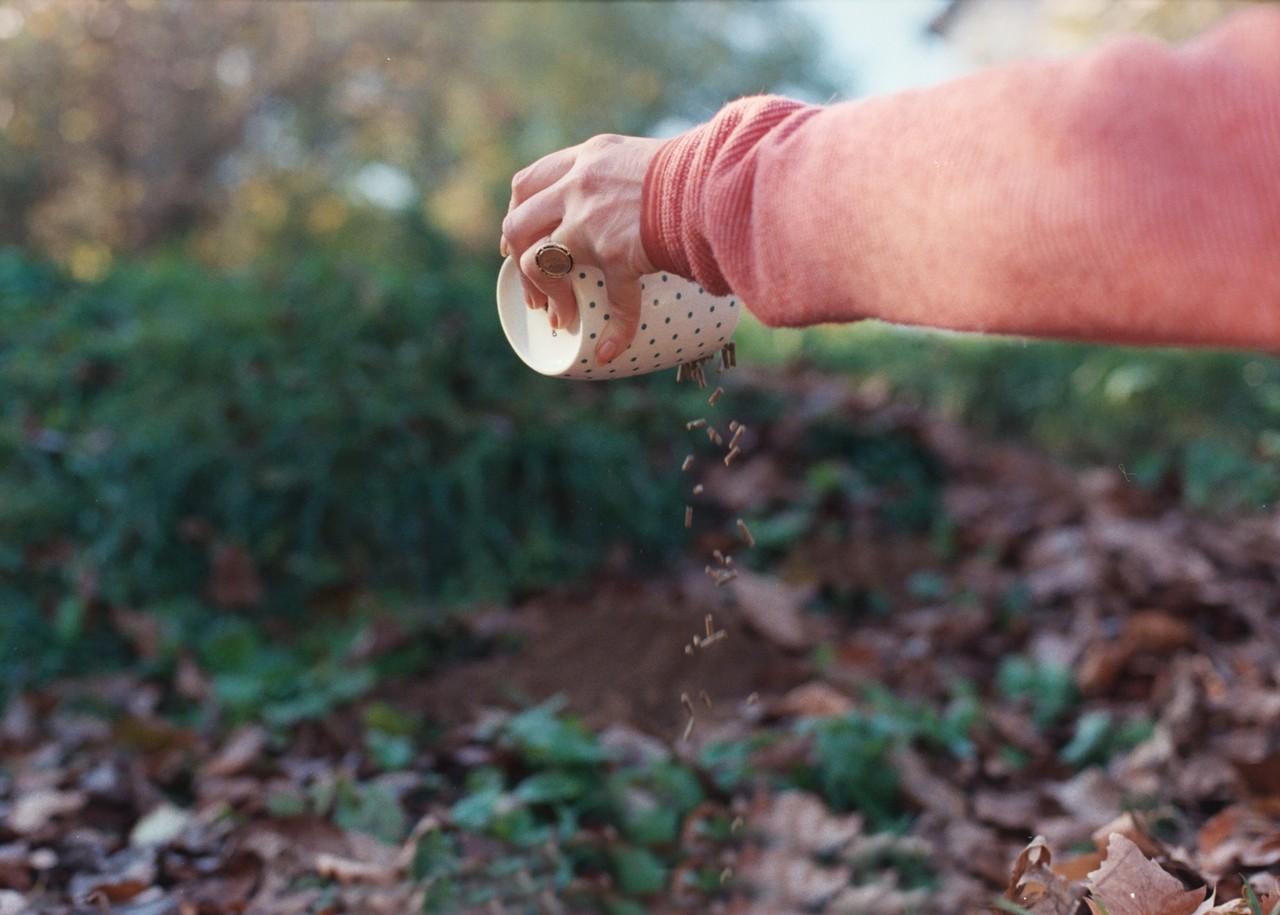
I haven’t slept for fourteen years.
It’s not that I sleep little, nor is it that I wake up startled in the grey, raw chill of dawn. It’s simply that sleep—that soft, dark, body-soothing state we take for granted—is absent from my life. Someone slowly, silently pulled the mattress out from under me, and what I’ve had in its place ever since is nothing but wakefulness. A thin, taut, constantly vibrating, metal-cold wire that won’t let me go. There isn’t a single difficult family lunch that I can sit through. The chairs hold me captive for too long, and my body doesn’t know stillness the way others’ do.
I’m pushing my limits. Not in an abstract, poetic sense, but concretely, physically—every single day, my skin rubs against an invisible, rough concrete wall, and, growing thin, peels away from it, reddened. I know that if I don’t do something about myself, there will be trouble. It won’t be a sudden, dramatic collapse, but that slow, crumbling, internal decay that the outside world always recognizes too late. Yoga helps me to some extent. Not as a miracle cure, nor as a form of healing, but rather as a new kind of strict, military-style discipline, where my body is finally not fighting against me, but is trying to survive the next twenty-four hours alongside me.
If someone asks me what I like most about myself, I’d say my arm without a moment’s hesitation. My arm is what says everything about me. It holds my strength—all that vast, invisible, everyday, stubborn work that people don’t write down anywhere, don’t get applause for, yet still carry on with. The tensed strength of my arms propels me forward, in the strictest sense of the word, like an inner, stubborn machine.
The first image: A movement in the corner of the living room. I’m standing at the edge of the rug, above the worn parquet floor. One leg pressed against my other thigh, my two arms stiff, fingers outstretched, reaching toward the ceiling—a dried-up but unbreakable branch. In the background, the TV’s dark, turned-off screen reflects the room’s monotony. This isn’t the yoga of peace; it’s the convulsive, vertical balance of survival.
I’ve always been an attractive woman. I’m not bragging—it’s a simple fact, a quality that others have noticed and that I’ve always been aware of. I’ve put a lot of work into myself. My delicate features were paired with a tough, lean body, since I’ve been playing sports since I was four years old. It wasn’t a choice; rather, I grew into that discipline. I’m fifty. I’ve always measured my nutrition on a pharmacy scale, taking care of my skin and maintaining my firmness.
Yet I’m not well.
The second image: Thirty-two kilograms of silence. The whitewashed, disinfectant-scented ward at St. László Hospital. A wax figure lies on the bed, its pale skin clinging to its bones. My muscles have wasted away, every layer of fat has vanished from me; my body has withdrawn into itself, saying: “Enough—I’m not taking part in this humiliating story any longer.” A little boy sits beside me, in thin pajamas, watching the rhythmic drip of the IV stand with huge, serious eyes. I’m lying in a coma, in the final stages of AIDS. It took me a full year after the coma to rebuild myself. For a year, I couldn’t stand on one leg; I’d lost my sense of balance. I had to claw my way back up from that depths.
The story is straightforward: based on the family allowance, I was automatically entitled to health insurance. My husband, however, went ahead and re-registered our little boy at his address. With a single stroke of the pen, he cut off my access to medical care. When I realized what had happened, I was paralyzed by fear. I made a bad decision—the worst possible one: I didn’t ask for help, I didn’t look into it, I didn’t knock on strangers’ doors. I don’t know what I was counting on. That’s when the HIV virus took control. I contracted it from my husband, years earlier. We didn’t know about it—neither he nor I. Everything came to light when my little boy was born, during the mandatory tests and when the symptoms suddenly appeared.
Back then, in the midst of all that chaos in the delivery room and the hospital, I didn’t care how or why it had happened. My husband always had mistresses—both before and after. My little boy was in the AIDS stage; I had to cling to him with every fiber of my being. He was all that existed. We had seven days to find out if the exorbitantly expensive cocktail of drugs would work. We spent three months in isolation.
When the day came, my husband drove over to pick us up. He said, “We’re going to crash into a tree right now, and we’re all going to die.” There was no anger in his words, just an absolute, blind, animalistic desire to escape. I didn’t know what to say to that. It never occurred to me to end our lives. For me, all that existed was the struggle, the next step, the next breath.
The third image: A handbike in the mud. A rural, potholed street, with the wet branches of acacia trees in the background. My son is sitting in a three-wheeled, hand-powered contraption, his face flushed from the exertion, that defiant yet triumphant smile at the corner of his mouth. I stand behind him, in my muddy sneakers, clinging to the frame of the bike with both hands, my face etched with deep furrows of determination and exhaustion. The two of us pushed that bike—into nowhere.
My husband and I stayed together for another eight years after that. Out in the countryside, isolated. I took care of my child from morning till night: doing exercises with him, feeding him, putting him to sleep, and doing more exercises. He started preschool, received specialized swimming lessons and physical therapy, but the system didn’t provide enough help, so in the end, I took over his therapy again. I did everything myself. On top of that, I worked two jobs; that’s when I started teaching yoga, while taking my son to the Pető Institute.
My husband was almost never home. A thick, suffocating web of secrecy hung over us: we had to keep quiet even in front of the family doctor and the public health nurses. The specialists advised us to lie and say that our little boy was in a wheelchair due to a complication from a childhood vaccination. That’s what we said. Mechanically, without so much as a twitch of a facial muscle. Meanwhile, the viral load in our blood—thanks to disciplined therapy—dropped to zero.
We lived. In our shared lie, everyone played their part. I worked on the child day and night. The progress was slow, microscopic, measured in months and years. I would always whisper to myself: just get through the next twenty-four hours.
At first, the doctors said he wouldn’t speak, swallow, communicate, or eat on his own. From that dark prognosis, we made it to the point where, at eighteen, he was learning English, graduated from high school, and—albeit with a walker—was able to stand on his own two feet. When he first spoke as a little boy and started joking around, that gave me faith. That was what kept me going.
The fourth image: The kitchen table in my rented apartment. I’m sitting at a worn table with a yellowish varnish in a prefab apartment building on the outskirts of Pest. I’m holding a ceramic mug with a chipped rim; the steam from the tea rises slowly in front of my face. Beyond the window, a neon sign flickers in the twilight. My gaze is vacant, but my arm—beneath the rolled-up sleeve of my sweater—is tense. This is an image of solitude and freedom, where there are no more threats, only silence.
After eighteen years, I finally said, “Enough.” I left my husband. I found a rental apartment and moved out of that hell. My husband made threats; he tried everything to break me. Once I sat him down, looked at my reflection in the windowpane, and told him: I’ll only go back if he puts an end to that parallel, debauched life he’d been living. He refused. So I left for good.
My son was accepted into the Pető Institute, and we rented a small apartment on the outskirts of Pest. At eighteen, he left home with his own money, his high school diploma, and the ability to walk.
Then he went back to his father.
That’s where his progress stopped. He doesn’t do anything; there are no expectations, no limits, and he likes this lazy comfort. Here, we had military-style discipline; there, it’s the cheap, hollow promise of freedom. Yet he really should be moving—for someone with a physically disabled body, daily exercise is key. He’s told me several times, in his more honest moments, that he made a bad decision, but he won’t take it back now. Out of pride, out of defiance—who knows. As a mother, this is excruciating to bear. To watch as the body—which I built from my own flesh and will, weighing just thirty-five kilograms when he woke from a coma—is now deteriorating day by day and growing heavy once more.
The fifth image: A winter wedding. Two people stand in front of the cold, paneled walls of the wedding hall. There’s no big fuss. I’m wearing a dark winter coat; the wind blows my hair back, but I’m smiling. Next to me is the man who has stayed by my side the whole time, catching me when I fell and supporting my struggle. Our shoulders touch, and this seemingly insignificant fact is more solid than any vow I’ve ever made.
My story, of course, is bigger than what a single person’s fate can bear. It’s an example of just how vital mandatory screening during pregnancy—examinations of expectant mothers—would be—not only in the privacy of private clinics, but also at the very lowest levels of the national public health system. How many mothers and how many children could be saved by a single, simple needle prick?
My son was sixteen when I told him the truth—about who we are and what we carry. He didn’t cry; he didn’t break down. He just asked, “Is that it?” It never even crossed his mind that the world was ending. He wanted to live because all he saw in me was the stubborn, animalistic will to exist.
I haven’t slept in fourteen years. There hasn’t been a single lunch in my life that I’ve been able to sit through. I’m pushing my limits; my skin is still straining against an invisible wall. I know that if I’m not careful, I’ll break down. But yoga, breathing, and inner silence pull me back.
When I see myself in a photo today, I’m not looking for the passage of time in it. I look at my arms. The muscles. The strength. The traces of everything I’ve endured so far.
14
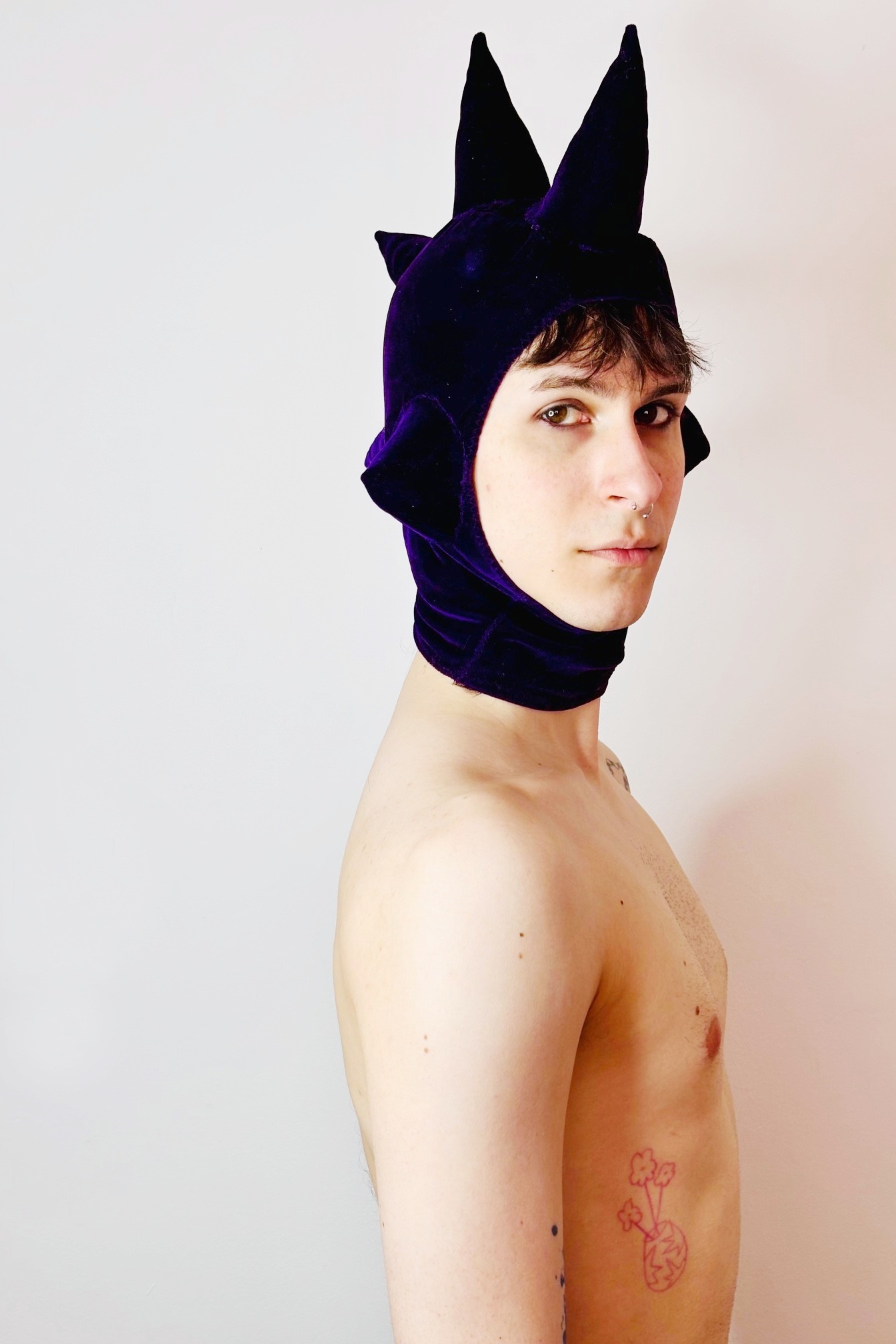
I am sorry if you didn’t like my performance, though I wasn’t necessarily trying to delight the honourable audience with it anyway, and I think we could save ourselves a few unnecessary national nervous breakdowns right there, because for some reason everyone in this frightened little country acts as if a drag queen’s primary, sacred duty were to smile nicely, have her dress fit perfectly, not be too loud, not be too sexy, not be too smart, and preferably do nothing that would force a middle-aged, pot-bellied man sitting in front of Facebook to suddenly ponder why he feels so unexpectedly hot in his own armchair. I wanted to create a performance that wasn’t a delicate afternoon tea, but a real, bloody statement, and I think I completely pulled it off during “Most múlik pontosan,” but I didn’t want to pretend either that I was the last sadly blinking saint of Hungarian history in high heels, which is why there was another, more party-vibed track as well, because in life sometimes on the exact same chaotic night a person wants to cry, dance, and fuck, and I think there is absolutely nothing extraordinary or sacrilegious about that, since just because something hurts doesn’t mean you have to huddle in a dark corner all night dressed in black while Chopin plays and everyone takes themselves terribly seriously.
I, for one, heartily hate it when people take themselves too seriously, even though most people would look much better if they occasionally noticed what a ridiculous figure they are in the drama of their own private lives. I am M.B, or as the spotlight knows me, Mia Szösz, and technically I really am a clown, which doesn’t offend me in the slightest; in fact, I explicitly love clowns, because they know precisely that the audience only laughs so loudly because they are actually terrified of something they dare not admit. I also know for a fact that drag has something inherently grotesque and ridiculous about it, and that is the most wonderful thing about it, how you stand there in an exorbitant wig that could cost more on its own than someone’s entire monthly grocery budget, while industrial glue strains on your forehead, fake eyelashes weigh down on your eyes, and you try to stride with incredible dignity in shoes that were most likely inspired by the most ruthless torture instruments of the Spanish Inquisition, all while inexplicably expecting people to see some deep, redeeming truth in you. Sometimes they do see something, and sometimes they just stare at my ass, but I can live perfectly fine with both versions.
It all began at home, of course, in the sultry solitude of my room in front of the mirror, where a person doesn’t have an audience yet, doesn’t have strict critics, doesn’t have Megafon, and doesn’t have a national organization preparing to file charges, but only has their own face, which they sometimes stare at so intensely and for so long that suddenly they no longer know what exactly they are looking at in their own pupils. At first I was Blue Barrymore, which I still think is a brilliantly theatrical name, but the simple children of the folk immediately started calling me Blueberry, and at one point I was forced to accept that bitter defeat that no matter how hard I build an entire Hollywood mythology for myself, people simply hear an actual blueberry out of it. I didn’t want to be a blueberry, because there comes a point in a person’s life when they have to stand up for themselves, and for me that point was precisely when I realized I was not willing to grow old as a drag queen named after a berry, which is how my imagination gave birth to the character of Mia Szösz. There is a sultry flippancy in this name, a little bit of spicy dirt, something that lingers on a person’s most expensive clothes anyway, no matter how relentlessly they try to brush it off. I don’t want to be monumental or unapproachable, I am far more interested in that moment when something is beautiful, but at the same time carries a dash of alluringly bad taste, when the glamour is almost too much for the eye, when the colour of my lipstick is redder than good taste would allow, and when a woman glides across the room with such dangerous confidence that it becomes almost awkward, and for that exact reason you cannot take your eyes off her.
I love being looked at, because I think it is a tremendously liberating thing when a person finally stops telling that hypocritical lie, “oh, I don’t want you to look at me,” while having just spent three whole hours at the dressing table painting an exact face on themselves that demands to be stared at. I love sexiness too, but not the kind that humbly begs for permission to enter, not the kind that tries to find the value of its own existence in the appreciative gaze of a man, but that raw power that knows precisely how insanely good it looks, and therefore has no intention of apologizing to anyone. I don’t want to erase my male body, I don’t want to morbidly round my shoulders, and I have no intention of denying my masculine jawline, because I don’t care in the slightest how female or male someone thinks I ought to be according to the rulebooks. Sometimes I look like a dangerous woman who just kidnapped a startled man, sometimes like a man who spent too much time in a sultry theatrical dressing room, and sometimes simply like Mia, and I think this absurd mixture is more than enough for the world’s sorrows.
When Pride approached me with the idea for the performance, I said yes immediately without any theatrical hesitation, since it didn’t require a national consultation, didn’t require summoning a family council, and I didn’t need to ask for a little time to ponder whether I was finally ready for my homeland. Of course, for a long time after that it wasn’t even certain whether we would be allowed to hold Pride at all, which in itself is such a surreal and absurd situation that if someone wrote it in a movie script, I would shake my head thinking it was an exaggeration, since every two months a person sends anxious emails to the organizers asking whether there will be a march, whether we can prepare at full steam, sew outfits, rehearse fierce numbers, and buy insanely expensive high heels, or whether the cowardly political agenda is once again for everyone to sit at home in the dark and discreetly be whatever they are. But I was preparing at full steam, because I was rock-solid certain that we would be many on the sweltering streets, out of sheer spite if nothing else, and spite has a remarkably fine ass, which I think is a fact undeservedly rarely mentioned by wise philosophers.
During the dramatic chords of “Most múlik pontosan,” I had the brilliant tricolour on me and the cockade was pinned there too, but not because I suddenly imagined myself as the lead protagonist of some tacky, televised patriotic gala, but because I was permanently sick and tired of certain self-righteous people acting in relation to these national symbols as if out of a massive family inheritance they were the only ones who inherited everything, and now they tightly press their palms against the display case lest anyone else even touch the glass. The cockade belongs to every single Hungarian, and if according to the authorities it doesn’t, then they should finally be brave enough to look me in the eye and state clearly who they do not intend it for. Let them say it right to my face that I cannot wear it because there is too much makeup on my face, let them say I cannot wear it because it looks different on a man’s body, or let them say I cannot wear it because I also happen to passionately kiss men, but I beg them, let them not pretend that the problem is an innocent piece of clothing when we know damn well that it isn’t.
An eager worker from Megafon then loudly declared that my performance was the most corrupt essence of Pride, where a man dressed as a woman writhes, throws the sacred cockade to the ground, and then theatrically pulls out the transgender flag, which by the way is an amazingly interesting psychological clinical picture, because it seems some people are capable of watching an entire emotional performance without paying attention for a single solitary second to what is actually happening on stage. If that unfortunate soul had paid attention to what dramatic line I pulled the flag out to, they might have understood the point, since I wanted to ask transgender people to consider carefully what is more important to them in this maddened world: their identity or their homeland. I know very well that this is not a kind or soothing sentence, but I didn’t intend it to be either, since I have no intention of enticing anyone into high treason, but rather I would like us to finally speak openly about what it means to belong to a helpless homeland that invests an increasingly unhinged amount of energy into telling you in what form you are acceptable and desirable in it at all. Transgender people, even within this marginalized queer community, belong among the most vulnerable, and sometimes this political witch-hunt quite literally looks as though certain unhinged minds would like it to be open season to hunt them down, identify them on the street, photograph their terror, and display them on television as if their vulnerable bodies were some kind of public property.
And then the dramatic question unavoidably arises: what is actually more important—who you are at the core of your soul, or that geographical place you obsessively keep repeating is your home? And what if you are simply not willing to choose between the two; what if you hold your head high and say that both are fucking mine? That is why the trans flag made an appearance in my show, not to angrily replace the Hungarian tricolour, but because I refuse to pretend that I have to choose between my own existence and my native land. The wound I wore in the performance represented a gaping, bleeding wound to me, one inflicted upon me as a member of the community by the ruthless politics of the past decades, but whatever the spectator sitting in the dark saw in it, I left entirely to their own imagination, because I am not a professional tour guide in my own drama. I don’t want to stand behind every single audience member in the shadows to tap them on the shoulder, saying, excuse me, here you are supposed to think of deep trauma, and over there of the painful ambivalence of national identity, because sometimes the audience actually has to work a little for their own theatrical experience. And as for dropping the cockade on the ground, I simply did it because I didn’t want to hold it in my hand any longer, that was the whole thing, that was the grand, pious desecration of the nation: a technical solution, a stage prop, a single tired movement.
Of course, despite this, some people in the media reacted as though I had personally scattered the ashes of their late grandmother into the spotlight, but that really isn’t my problem anymore. The Sixty-Four Counties movement now desperately wants to report me for desecrating national symbols, to which I can really only say from behind my heavy makeup that neither they nor Előd Novák are going to define what Hungarian identity is, nor will they dictate what symbols I am allowed to use as a Hungarian born and raised right here. They are not the sole constituents of national unity, no matter how much they like to present themselves in front of the cameras as if Hungarian identity were a cramped little apartment whose key rests exclusively in their pockets, and now they are terribly nervous because someone else figured out the door code. And I am not willing to humbly ring their doorbell, just as folk art isn’t politics either, or at least it shouldn’t be turned into politics every single time someone touches it whom the bearded gentlemen don’t care for. A beautiful motif doesn’t become any less Hungarian because it appears on my extravagant body, and a flag doesn’t blow any less in the wind just because I happen to be wearing a massive wig on my head.
The whole media storm erupted on Monday, right when I had my entrance exam at MOME, so from nine in the morning until four in the afternoon I was feverishly painting in the studio, and during the brief lunch breaks I was hurriedly giving interviews while my phone buzzed continuously in my pocket, until after a while I had such a surreal feeling as if the dramatic life of a completely different person were unfolding on the screen, who just happened to share my name. By the end of the first day, the official message had already arrived saying they were pressing charges, and then for four days straight everything poured over me unabated from the dark depths of the internet: “You are an icon.”, “Genetic trash.”, “You shit on the flag.”—I think that is one of the most accurate and raw portraits of the internet I have ever received. Icon, trash, icon, trash… a person slowly doesn’t even know what fierce outfit to wear for such a schizophrenic role.
Of course it got to me, because I’m not made of concrete, and if someone really imagines in the dark that a drag queen wears this many layers of foundation because she is completely immune to hurt, then they have probably never spoken to a single queen in their entire life. I tried to avoid the toxic comments, even though I love doomscrolling, which is obviously a sick and destructive habit, but at least an honest one, but I did read the private messages, and the people making threats I blocked without hesitation, because I am under no obligation to patiently listen to everyone who wants to kill me, since it would be hard to interpret that as part of open social dialogue anyway. My mother, however, was terrified, and that was an entirely different, deeper kind of pain, because for a while she looked at me in the kitchen as if I had done something terrible, even though I knew she didn’t think that deep down in her soul, but simply thought what an anxious mother thinks when she sees total strangers suddenly talking about her child as if he weren’t even a human being, but a dangerous social problem that urgently needs to be solved. In this country, what is right and what is safe are unfortunately not always the same thing, and with her own experience, she knew that much better than I did.
In recent years, as the active malice of the government grew increasingly suffocating and oppressive, I also had very volatile, dark states of mind, when sometimes I was fatally exhausted, sometimes angry, and sometimes so angry that I even annoyed myself with my own tension, but the one thing I was rock-solid certain of was that I would be there on the barricades at Pride. Among other things, I do this glittering drag to increase our visibility in all this grayness, and that visibility always comes at a price, since drag queens are the most colourful, most noticeable beings in the community, we are the ones whose gazes lock onto even when passersby don’t even want to look at us, and a single massive wig sometimes does more for real visibility than an entire ministry strategy. And of course, as I said, technically I am a clown, but that doesn’t mean I’m stupid either; in fact, it is sometimes an explicitly intoxicating feeling when a person in full majesty, in makeup, in high heels, in a dress that an average, narrow-minded politician would probably only see in his worst nightmare, sees the social situation far more clearly and accurately than those responsible gentlemen who spend all day preaching into microphones about how dangerous we are to society.
I don’t want to convince everyone of my truth, and I have no intention of participating in every unworthy debate, so I really am sorry if you didn’t like my performance, but I didn’t do the show for you to delight in it. I am not a comfortable throw pillow, I am not a tastefully placed, harmless queer decoration in the national living room, and I am not going to sit quietly and nicely in the dark corner while you decide among yourselves whether I am Hungarian enough to touch the culture that you think only you have any right to. I was born in this country, I grew up right here in the concrete jungle, this raw language is in my mouth when I am in love, when I curse profanely, when I lie, or when I stylishly tell someone to go fuck themselves. I am not going to hand this heritage over to anyone, I am not handing it over to any political party, I am not handing it over to any extremist movement, and I am certainly not handing it over to those who treat Hungarian identity like a fragile family china set that can only be touched on holidays, and even then exclusively with spotless white gloves. To me, “Most múlik pontosan” was not a helpless surrender of my homeland, but quite the opposite: a passionate argument, an impudent, high-heeled argument wearing way too much makeup, because a person only argues this much and this fiercely with something they still have a deep, unbreakable connection to, and I have a fucking connection to this country, so I am not asking anyone for permission.
15
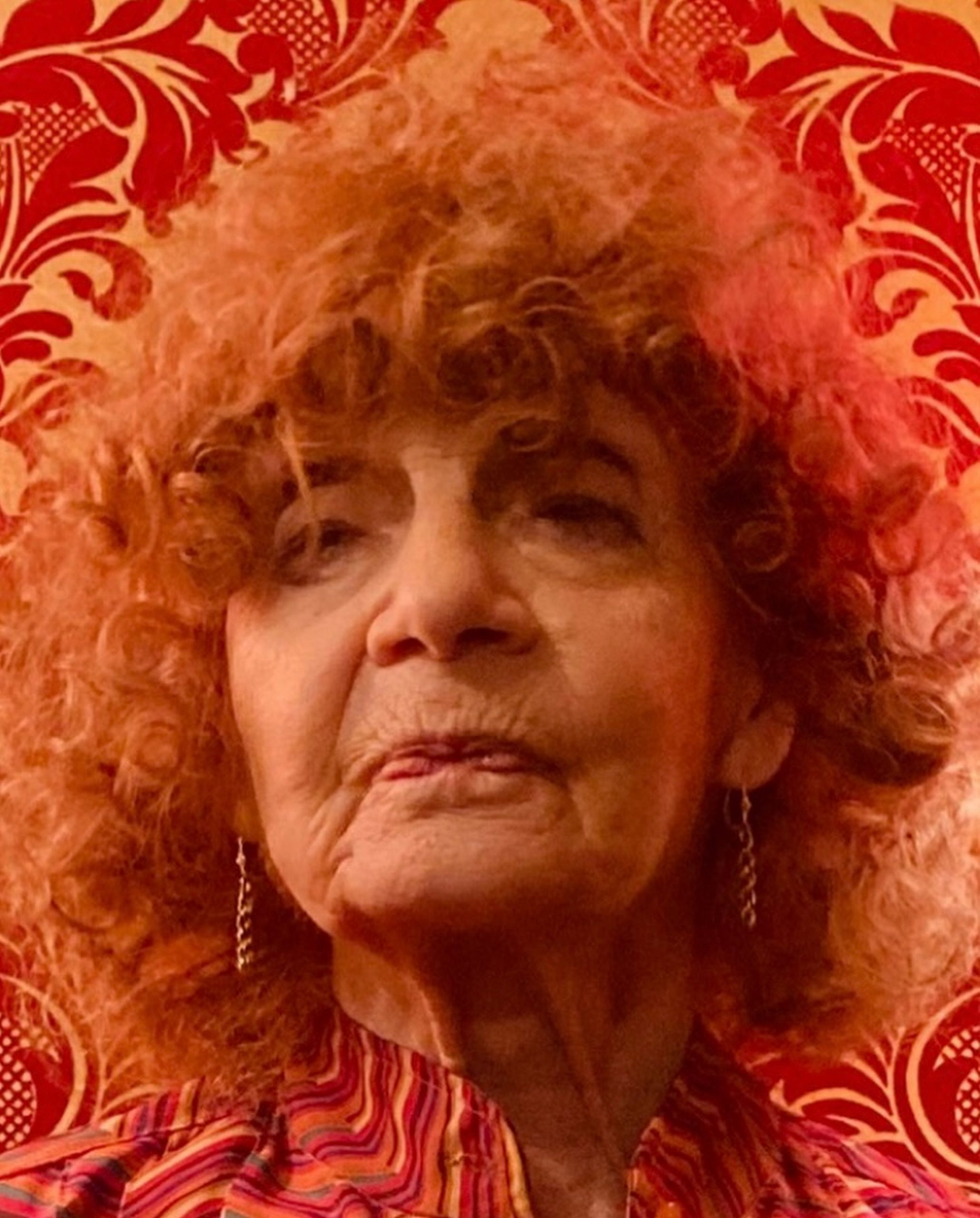
In this country, a woman over forty becomes invisible. As if she doesn’t even exist. That is what I will always fight against. I am ninety-three years old. I don’t know it from the mirror, nor from the dry clicking of my bones when I rise from the armchair-because by the time one gets around to noting that straightening up was harder than the day before, the body has already completed the movement, the spine is straight, and one can already carry on-no, I know it from that devastating, silent disproportion stretching between the unchanged temperature of the soul and the icy indifference of the outside world. They think old age is tranquillity, that time slowly quiets the blood, extinguishes the fire, and in the end nothing remains but the steam of herbal teas, the sound of the blaring radio, the silliness of Turkish soap operas, quiet remembering, and a peaceful waiting for death. What a merciless mistake. Old age is not the absence of desire, but the captivity of desire. Behind my ribs, an unappeasable, hungry woman screams into the silence, thirsting for life, beauty, and touch in the exact same way as sixty years ago.
In the mornings, with the same ceremonial, slow movement, I open the oak-carved wardrobe door. The clothes hang in a dense, packed row, like the abandoned cloakroom of an unfamiliar theatre; the fabric of some I can barely remember, I don’t know in which year or in which city I wore them last, but as my fingers glide along the silk or the rougher wool, my skin immediately recalls the physical structure of wearing them. I remember the passion, I remember the love, I remember my existence. I know why I kept them. Sometimes I even put one or another on-fortunately, my size has remained the same-and I dance. Humming, I recall the waltz I danced with my love; that is when I am alive.
Here is these blue jeans, flare-legged, the waist still fitting perfectly against my hips, which still remember the old movements. At the knees, where the threads have thinned over the decades, they are slightly faded, but the colour still holds that deep, rich blueness that I no longer see anywhere in the shops nowadays. If I choose these jeans, without a second thought I reach for the black, narrow-heeled shoes. There is no compromise in this. This is not a memory, but the last bastion of posture, of straightness. The fabric falls over the front of the shoe, almost completely covering its heel, and to the outside world the mechanism remains hidden: only through the rhythm of my walk, the arc of my steps, can one see that I have been lifted up. I used to love high heels in the past, too. A person’s body behaves differently in them; the bones of the feet shift forward, the pelvis tilts, the back muscles involuntarily tighten, and the head sits a little higher in the space enclosed between the shoulders. Sometimes I stop in front of the mirror, turn to the left, then to the right, and check the arrangement. Smiling, I walk down Attila Street; I exist.
I also have a brown dress, made of quite thin, almost weightless fabric. At the left shoulder, the seam always slides up a bit toward my neck-in my youth this inaccuracy bothered me intolerably, I was constantly adjusting it, but now, as that little wrinkle touches my skin, there is something reassuringly stable about it. Another dress of mine has a collar that is starched and exaggerated, the kind no one would wear today without being taken for someone in a costume. Sometimes I put it on, stand in the middle of the room, and then take it off anyway, because it doesn’t form a balance with the shoes. One would think that at ninety-three such details lose their weight, that age excuses one from aesthetics. Not to me. It took decades for a person to learn her exact lines, her silhouette, what highlights and what covers the essence, and I am not willing to throw this knowledge away just because time has passed over me.
Fortunately, my hair has remained: thick, golden-brown, with natural waves. I don’t dye it with such obsessive frequency as before, but I still recognize its tone in old photographs. In the mornings I spend long minutes with the hairdryer; if it stays wet at the roots, the locks grow heavy, the whole hairstyle collapses, and a complete stranger’s face looks back at me from the mirror-a face with which I have nothing to do. As the hairdryer’s hot air glides along my neck and the sensitive skin behind my ears, the strands slowly separate from each other, drying in the back, then at the sides. Meanwhile, I do not break eye contact with myself in the mirror.
In the past, of course, others touched my hair. In the dressing rooms of the operetta, before the illuminated mirrors, stranger’s hands pinned it up, twisted it into waves, drilled cold bobby pins into the bun, and when one suddenly turned her head, the sharp end of the metal stabbed into the scalp. I still remember the continuous, monotonous buzz: the sound of footsteps streaming in from the hallway, the callboy’s shouting, someone looking for one half of their shoes, someone else already struggling in a stiff corseted costume in the narrow doorway, and in the background that peculiar, tense air was always present, that sentence that was repeated softly or in raised voices, but continuously: we start in a moment.
In the makeup room it was always humid, heavy heat. The lightbulbs framing the mirrors poured out warmth, and in the air floated thickly the fine dust of powder, the pungent vapour of hairspray, and the mixture of heavy, floral perfumes. These three smells in that enclosed space coalesced into a single complex, metallic scent that immediately triggered a state of readiness in the body. There, no one was yet the figure that would be seen from the auditorium, but they had already broken away from the person who half an hour earlier had stepped off the tram.
Now there is no dressing room. I do it myself. Beneath my eyes I smooth fine powder, I frame my eyelids with a dark line, and finally I apply lipstick to my mouth. I do not do it out of vanity. When the lipstick glides across my mouth, I am sending a message to my mirror image: I still have lips that can be kissed, I still exist. I keep my lipsticks on a small acrylic stand; among them is a deep red whose cap has already cracked over the dried layer of paint, and can hardly be pressed tight. I might as well throw it out, but the old shape is still in it. I cannot bear it when someone makes a comment about why this care is needed at this age. For the same reason as fifty years ago. When I look in the mirror, I don’t want to document the decline; I want to see the moment when I am ready. When I am present.
My jewellery lies in a velvet-lined wooden box. When I open the lid, the chains and rings shift, and the metals touch each other with a soft, dry scrape. Some pieces I received from my husband, others I bought myself on various tours or out of instalments of my performance fees. I no longer remember their price at all. When young, a person knows exactly what something cost, then the numbers slowly begin to fade, until finally they disappear completely, and only the weight of the object remains. The order of their use, however, I know by heart. The heavier, dangling earrings I put on exclusively with dark, closed dresses. The thin gold chain when the neckline of the dress runs high. Sometimes I try on the rings one after another, arranging them side by side on my fine-surfaced, vein-drawn fingers, and I look at my hands. These hands are old, the skin thin as parchment, the knuckles stick out-this I see clearly. But the cold stones and polished gold of the rings are precisely the same as forty years ago.
My perfume has a fixed spot on the right corner of the dressing table. Sometimes I really do exceed moderation, spraying too much onto my wrists and neck. But that suffocating cloud of perfume is not an accident; it is a desperate cry out to the world: notice me, I am not yet the smell of earth! The woman who comes over to my place three times a week to help regularly comments on it.
“It’s too much again, Aunt Anna,” she says as she steps to the window.
“Then at least they’ll know in the hallway that I’m approaching,” I reply.
Then she just stops and looks at me with that expressionless, somewhat tired gaze.
She exists according to a completely different rhythm. When she arrives, she drops her heavy, stuffed bag onto the small bench beside the door, mechanically takes off her coat, and while unbuttoning it, her eyes are already scanning the terrain. I see it in her as she takes stock of my mess. My shoes, which I didn’t put back in the closet last night and remained there at the edge of the rug. The half-finished teacup on the side table. The letters and documents that I again failed to organize into a folder. The closet door left ajar. She asks no questions. She steps over to the fridge, yanks open its door, stares intently into the barren shelves, then slams it back with a single decisive movement.
“There won’t be lunch out of this,” she states.
“I had no intention of eating lunch anyway,” I reply from the armchair.
“I know.”
From the depths of her bag something then emerges: half a loaf of bread, a plastic tub of yogurt, sometimes a slightly bruised apple. She unloads everything onto the kitchen counter with such measured, self-evident movements, as if we had coordinated it for hours, though we hadn’t exchanged a single word. If in the meantime I start telling her something-about an old tour, the sultry air of theatre evenings, the men who waited at the exit-she listens in silence, but her hands don’t stop. She wipes down, rearranges, and right in the middle of my story she abruptly cuts my thread: “Aunt Anna, did you take this pill?”-and I am left there with an unfinished sentence. She doesn’t see me. None of them see me. They see a fragile skull, a care case, an old woman with slow steps, but the woman raging inside me, thirsting for an embrace, has been erased from reality.
She is damnably perfect. With her, everything has an unquestionable place. If I misplace something in the apartment, she finds it in seconds, even though I hid it myself. She knows exactly which drawer hides the bills, where the spare painkiller is, and when the pantry needs stocking. Sometimes I quietly observe her even, purposeful movement between the rooms. It bothered me when she rearranged my things, yet there is something comforting when the chaos smooths out and everything returns to its designated place. And she knows precisely that this tidying up comforts me in the end.
When we set off somewhere, she always hurries me, as if the outside air carried danger. I would still stop in front of a shop window, look at a hat or a silk scarf, linger at the street corner. At such times she stands on the sidewalk, waiting with arms crossed.
“It’s cold,” she says.
“It’s not cold,” I reply.
She doesn’t argue. She just pulls the dark zipper on her coat all the way up to her chin and looks at me silently.
“Can we go?”
“Not yet.”
She stands in the draft and waits out my minutes.
All my life I have been fascinated by observing people. Perhaps this instinct ultimately steered me toward interpreting when dancing ceased. I spoke Slovak, German, and Czech fluently, and when someone sat opposite me at the negotiation table, I didn’t just listen to the grammar of the words. I watched their gaze, the tiny twitches at the corner of their mouth, the involuntary clenching of their hands, the rhythm of their breathing, and that moment when their eyes avoided the person sitting opposite me. Sometimes I knew exactly what they wanted to say even before the sentence took linguistic form within them. People rarely say what they actually think, but that doesn’t necessarily mean a lie-they simply do not have at hand that specific sentence that would cover their inner reality.
I loved this mediation. I loved the responsibility as I carried one person’s thought over into another person’s world. In this process, of course, something always evaporated, and some foreign element was inevitably added to the text, even in the case of the most precise translation. For facial movements cannot be translated into another language. The fact that someone dropped their gaze to the polished table top before the end of a sentence, or that the other party’s mouth narrowed into a single thin line, was left to my internal interpretation.
I loved the dynamics of my work, the constantly changing people, the smells, the different lighting conditions of the conference rooms, the acoustics of the voices. Once a man spoke to me for hours at an official meeting, and while I was translating his words, I watched his right hand the entire time: with his thumb he rubbed the first phalanx of his index finger continuously, monotonously. Today I don’t remember a single word of what he said. But the rhythm of his thumb’s movement is still here before my eyes.
My second husband was a doctor. We met because my mother worked alongside him as an interpreter. We got married on the second of December. This date has remained clean and sharp, while whole decades have fallen out of my memory entirely. I don’t know why December second stuck so stubbornly. Not long after that clear date, I moved to Budapest.
That was when I stopped dancing.
At home in Slovakia, I danced on the operetta stage. From the outside, it was no great career, but to me it meant completeness. When one steps into the circle of the spotlights, the body knows its task even before the music plays. The movement is there in the tissues. The partner’s body moves there in your immediate vicinity, you have to coordinate your own centre of gravity, his movement, and the angle of the light coming from above all at once. Sometimes even now, at ninety-three, a motif is summoned up, and my feet react to the inner music faster than my brain can recall the choreography.
On stage I was not ninety-three, but I was not twenty or thirty either. The task existed, along with that strict question: am I still capable of it without a mistake?
Perhaps that is why I quit in time. I didn’t want to wait for the moment when I would see in someone else’s eyes the failure to measure up.
Together with my husband, we decided not to have children. I lacked that maternal instinct that other women talked about. I never felt a void because of this, for in place of that lack something else existed. We travelled. We toured Europe, lived in hotels, walked on the cobblestones of unfamiliar streets in the mornings, and it happened that by the afternoon I could navigate a foreign city as if I had grown up there. In the hotel rooms the same cool, starched white linen always greeted us, but the shape of the windows, the angle of the incoming light changed, and in the mornings, in the first seconds of waking, I sometimes didn’t know which country I was in.
My second husband liked to drink. The first one did too. It is strange how in two completely different people the exact same bare passion can be present, and how it can destroy the boundaries in precisely the exact same way. I divorced my first husband. The second died ten years ago. Today would be our wedding anniversary.
For ten years no one has touched me in a way that had life in it. For ten years I have been living in this physical vacuum. And the most painful thing is not that he is gone, but that I am still here, and my capacity for love, for passion, has not diminished by a single percent. In the apartment his objects are still present. Not many things. A few worn books on the top shelf, two well-kept shirts deep in the closet, and such indefinable little things about which one can no longer decide whether they were once his personal property or simply belonged to the apartment’s furnishings. Sometimes I open a drawer and stumble upon something I thought had long disappeared. A dried-up ballpoint pen, a lonely button, a scrap of paper with a note in his angular handwriting. I don’t always touch them. Sometimes I just stand before the open drawer, look at the object, and then slide the wood back with a soft snap.
I visited the senior centre purely because those around me kept repeating that I needed company. People played cards, drank tea, packed pastries for one another. I went a few times. I could have easily mastered the rules of bridge; I had no problem with the card game. It was the environment. Not the individuals separately, but the inevitably recurring loops of conversation. My daughter said this, my son arranged that, my grandchild likes this pasta, my daughter-in-law cooked this, on Sunday we were all there. I just sat and listened. Sometimes someone turned to me and asked how many grandchildren I had.
“Not a single one,” I would say then.
Then a short, awkward silence always fell over the room. An indispensable piece of data was missing from my personal file, without which one cannot be placed in the system.
I never wanted a child. There was no great tragedy or trauma behind it-at least not one that society would accept as an excuse. If a woman states that she did not ask for motherhood, the others immediately become suspicious and start looking for the hidden injury. I was not injured. My gaze was simply set in a different direction.
I like people. I like to talk. I like it when someone sits next to me on a bench and I cannot predict their sentences in advance. I like it when the layers of a person’s character unfold slowly, gradually before me. These are faces drawn in pencil, and I don’t like it if someone tells everything about themselves in the first five minutes of acquaintance. Then the joy of discovery is gone.
I like going to the movies. I’ve had this attraction since childhood. The film itself I like to process alone, but the spatial experience of the cinema I don’t willingly go through without a companion. Right at the entrance that peculiar excitement grips me, when one buys the ticket, steps into the hall, and is hit by that cool, sweetish, musty smell that belongs to every cinema. The cashier tears off the edge of the ticket with a paper-scented motion. In the auditorium the wall lights are still lit, the audience is looking for their rows of seats, someone has already slipped out of their coat, another is still browsing their illuminated screen. Then slowly, gradually, the light goes out.
That is the most beautiful moment.
During the screening I often completely forget my age.
In the past I used to go to the movies with my husband. If the production was good, on the way home in the street we would analyse its structure for hours. If it was bad, it was even better to argue over. It happened that upon arriving at the apartment we tried to recall a certain shot, but neither of us remembered it precisely. Now I go alone when my legs allow it. I put the movie tickets in the inner pocket of my bag. Formerly I collected them to document the films; now rather because it feels good to know that the paper scrap is tucked away in my pocket as I step along through the cold on the way home.
Sometimes even in my room I can smell the cinema on the fabric of my coat: this unmistakable mixture of old plush seats, floating dust, heating, and strangers’ perfume.
The young director who approached me shot a documentary about me. He divided the material into three sections. In the first, my husband, who has been dead for ten years, dances with me. In the second, I am sitting at a table talking with him. In the third, we are having lunch together. When I first saw the finished material in the editing room, a very strange feeling came over me. In the lunch scene we are sitting opposite each other at the table with the white tablecloth, and I am looking at him in precisely that way, with that familiar, sharp, longing attentiveness as I looked decades ago. On the table there is the porcelain plate, the water glass, the food-every element creates the illusion as if this were a completely ordinary afternoon. Only he is dead.
Sometimes I catch myself softly humming our song.
I cannot register precisely when I start it. I only wake up to the fact that the melody is already playing inside my head. Sometimes a sudden movement brings it to the surface, or a strange man’s step on the street, the way he turns his head at a certain angle. The body’s memory is amazingly durable. Perhaps deeper and tougher than that of the intellect.
I don’t know exactly when I first noticed that silent withdrawal on the part of the world, this invisible glass wall that society builds around women as soon as they cross the threshold of visible youth. Perhaps when in the shops they were already looking right through me, or when a woman in the grocery store remarked aloud that at my age lipstick was really unnecessary. To become invisible does not mean that your body vanishes in its physical reality from the street. It means they deny you presence: they extinguish in you the woman who is still hungry for life, who desires, who feels, who demands beauty and attention for herself. This is that slow, unnoticed decapitation to which most resign themselves. I am not willing.
I, in any case, do my blow-drying in the morning. I put on my heavy earrings. I choose the ring. I find the blue flared jeans and the high-heeled shoes. Sometimes I sit on the edge of the bed to pull up the heel section, and for a while I just look at my feet in the dark leather. The pant leg of the jeans ends precisely above the front of the shoe. When I stand up, my posture changes.
Then I spray myself with the perfume. Sometimes a little too much.
And I step out onto the street. I don’t have to walk long on the sidewalk. Someone recognizes me from afar in the light.
“Good day, Anna.”
And I turn there slowly, with dignity, like one in whose gaze all her forgotten loves and every suppressed desire shine.
16
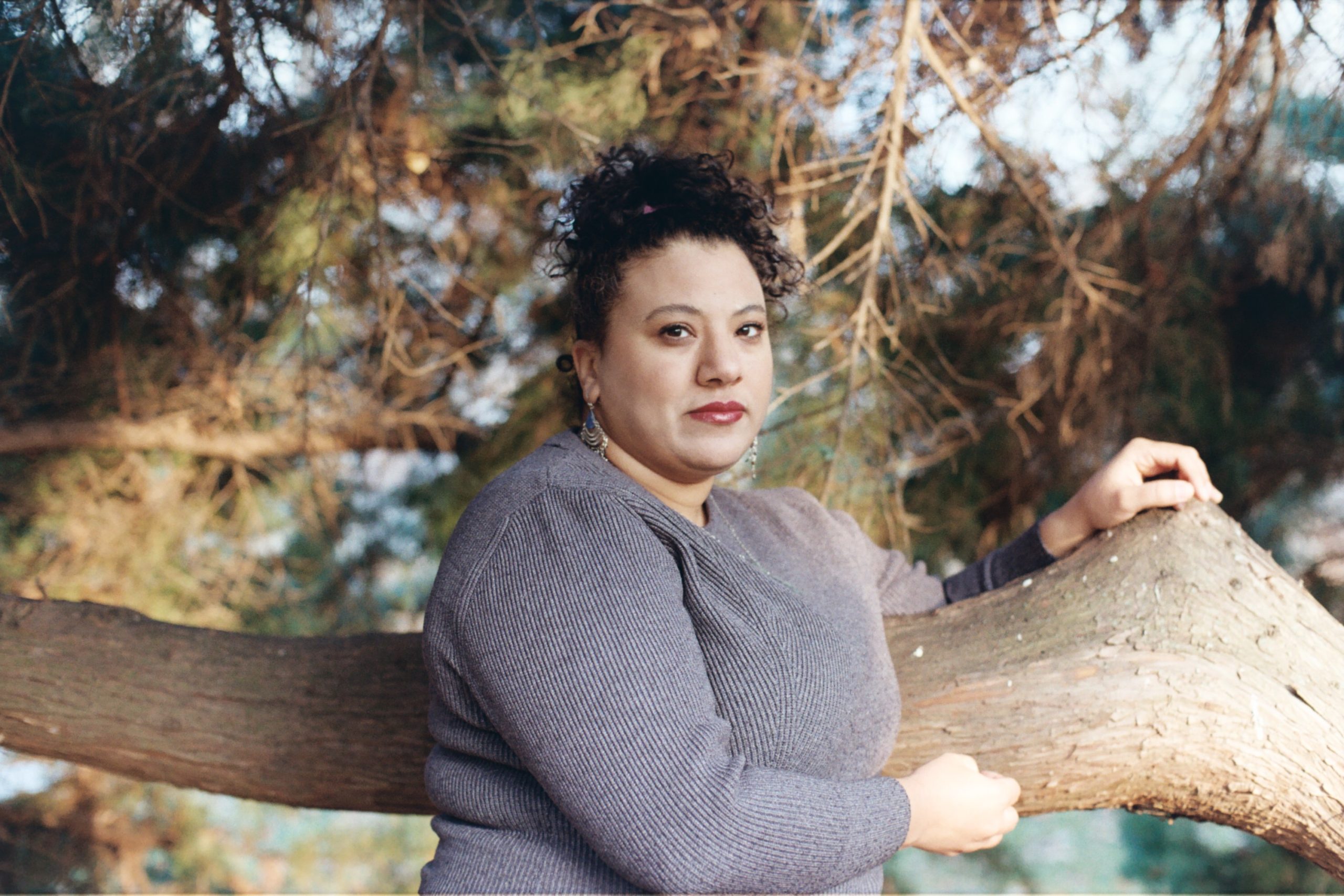
I have known since I was nine years old that the body is not entirely mine, or at least that is the first thing they teach a girl, even before she learns how to lie, how to ask permission for something that really shouldn’t be tied to permission, how to walk down the street without showing how afraid she is, and how to start checking herself after a while, because if they tell her long enough that what she does is dangerous, how she dresses is dangerous, how she speaks is dangerous, whom she loves is dangerous, then sooner or later she herself starts watching herself, a stranger moves into her head, and bosses her around from in there, constantly bossing her around. I was ten years old when I was mutilated, and since then I particularly hate those words that try to turn this into something more tolerable, into tradition, custom, religious prescription, family matter, because I don’t give a fuck how old a tradition is if a child’s body is the price for it, and I don’t care how many people believe in it, how many did it before me, or how many generations said this is how it has to be, because I was that ten-year-old child on whose body this was carried out, and I had to go on living with it, I had to get up in the morning, get dressed, go to school, stand among people as if something ordinary had happened, while a part of me already then knew precisely that life is not what they say it is, and that people find it astonishingly easy to call things love from which every child should be running away.
When I got my first period, my hair also gained a different meaning at the same time, from that day on my body was not mine, but some kind of bearer of the family’s honour, which has to be covered, which has to be controlled, which cannot be just shown like that, and I didn’t understand how it could happen that from one day to the next the same hair, the same face, the same body, which yesterday was simply just mine, suddenly becomes everyone else’s business. The hijab went on, and on the street began that other kind of education that men performed on me with their eyes, with their catcalls, with their following me, with that confidence with which they thought they had a right to me, and I learned very quickly what an absurd task was assigned to a woman in this world, because she has to be invisible and at fault at the same time if someone sees her, she has to protect herself and at the same time be responsible for what others do to her, I am supposed to solve the problem that certain men are unable to walk down the street without feeling that every woman they see is some usable thing. After I turned twelve, I couldn’t even do sports anymore because my body became too visible, too female, too dangerous, and meanwhile everyone said that this was happening in my interest, that they were protecting me, which is one of the most disgusting lies you can teach a child, because between protection and confinement sometimes the only difference really is who holds the key.
And I learned my whole childhood how not to ask for too much. I could go to school, I could go to a course, everything else required an explanation, and slowly I would have had to submit an official justification for my every single move, where I was going, why I was going, with whom I was going, when I was coming back, and after a while the question was no longer whether they would allow it, but whether I could find a good enough story to let me go. A person can be grateful for completely ridiculous things when confined for a long time; I, for example, was happy that I could study, because university became one of the few places whose existence I didn’t have to be completely ashamed of, and in me there was a very simple, almost primitive plan to finish, move away, have my own place, have my own key, and finally not have to tell anyone when I lock the door behind me. I didn’t want a palace, I didn’t want an extraordinary life, just that fucking simple luxury of my life being mine.
Of course, in the meantime the abuse happened again, within the family too, and also among people whom I called friends, and this is the part I don’t want to tell as if in hindsight I understood everything perfectly now, because I don’t understand, and I don’t want to neatly arrange myself the way people like survivors to be. I knew they were hurting me, yet I stayed in certain relationships because I needed people, I needed connections, I needed something that would help me reach independence from my family, and when a person learns her whole life that alone she is in danger, then it is fucking hard from one day to the next to learn that being alone is sometimes much safer than staying beside a person who claims to love you. I wasn’t always smart, I wasn’t always cautious, I wasn’t always good, and I am grateful to myself for this, because at least I don’t have to lie about being some pure, flawless victim. I wanted to live, and life sometimes meant ugly choices, bad people, bad places, desires I later regretted, and moments when I knew precisely that I should leave, yet I stayed because I was afraid of what would happen if I were truly left alone.
Then I moved to Cairo, took off the hijab, and from the outside this might seem like a ridiculously small thing, but to me it was as if someone had suddenly opened a window in a room where there had been no air for years. I saw my hair, I felt the air on my neck, I acted in theatre, I studied, I was among people, and I began to experience that strange, almost scandalous feeling that maybe I don’t have to ask permission every single moment to exist. On visits back home, of course, I put the scarf back on, I lied about where I lived, what I was doing, who I was with, because even then I knew that the truth does not always set you free, sometimes it just means another beating, another confinement, another control, and so I began to live two lives, in one I was who I wanted to be, and in the other the girl my family wanted to see, and somehow neither could completely destroy me.
They found out that I had taken off the hijab and was acting in theatre, they wanted to prevent me from returning to Cairo, and I went back, because by then I was so sick and tired of everyone telling me where I could go that I simply could not bear to ask for one more permission. Three weeks later, because of my father’s illness, I went home anyway, and today I know precisely how dangerous the concept of family can be, because inside a person something of the child remains even when she has long known that place is not safe, and when I arrived, they took away my ID, my keys, my phone, and I stood there among those objects that until then I thought were just objects, and suddenly I understood that the key is the exit, the ID is my name, and the phone is the world, and if they take all this away, how fucking fast a person can be turned into a prisoner. They said the police were watching, that I was in danger, that because of me others might get into danger too, that they knew about certain connections, and I no longer knew which part was true, which was a lie, which was a threat, because for fear you don’t need truth, just enough uncertainty, a closed door, and a few people who know they have the key.
Then again a decision had to be made about my body.
We always came back to it.
As if in my whole fucking life there had been no other topic than what happens to my body, who can look at it, who can touch it, what I should cover of it, what I have to prove with it, and what can be used against me from what others did to it. They took me to a doctor to examine whether I was a virgin, as if the moral value of a woman’s life could be decided by such a sentence, and when he said that I was not a virgin, suddenly everyone looked at me as if I had committed some crime. That was one of the most absurd things in the whole matter: everyone was examining me, questioning me, judging me, trying to control me, while those people who hurt me somehow always remained outside the picture. As if my body were the problem, not the violence it suffered.
They locked me up for a year, and meanwhile the word home completely lost its meaning for me. Home became the place you cannot leave, family became those from whom you cannot ask for help, and love became the word behind which you can hide anything, even someone telling his own daughter that it would be better if she killed herself. I was given three choices, and today I don’t even know which was crueler: that I get married, that I leave the country, or that I die, because in all three the point was the same, that not a single version of my own life was acceptable. In the first months I had barely any contact with the outside world, and time suddenly lost its structure, there were no proper days anymore, only hours stacking up on one another, food, sleep, walls, door, silence, and sometimes my own thoughts, which became so loud I thought I was going crazy. The worst wasn’t even that I couldn’t go out, but the thought that maybe nobody knows where I am, maybe everyone is going on with their own lives while I disappeared, and the world doesn’t fucking stop for a girl.
But a few of my friends looked for me and found me.
Later I was also given internet access so I could somehow get out of the country, and by then it was Covid, the world had closed up too, the entire planet turned into one huge room, and I sat before a screen sending applications to different parts of Europe for months, writing down the same words over and over again, that I wanted to study, I wanted to work, I wanted to be in a community, while in reality what I wanted to say was: fuck you, just give me an exit. I didn’t need a dreamland, I didn’t need a career, I didn’t need anything big, just a place where nobody could lock the door on me. Finally, I was accepted to Hungary, and by then my father was sick too, with cancer, and that man from whom I had to flee ended up helping me leave, because he too knew it wasn’t safe for me to stay there, and I haven’t been able to properly settle this contradiction within myself ever since. I don’t want to say that I forgave him because he died, and I don’t want to say either that he was just a monster, because that would be too easy, and I have lived too many times in a world where they tried to squeeze everyone into a single role. He was my father, I was afraid of him, I loved him, I hated him, I needed him, I fled from him, and in the end he helped me get out. All are true, and none erased the other.
In the year before my departure I wrote every day, in a notebook, full of hatred, and not some beautiful, liberating hatred, not the kind about which later one can say that it eventually turned into love, but with that raw, filthy hatred that forms when someone is forced for too long to remain silent. I left the notebook there when I left, because I thought that if I didn’t bring it with me, then maybe I would leave the whole thing behind, but of course that’s not how it works, because a person cannot leave her hatred in a room. She carries it forward with her body.
In October 2020 I arrived in Hungary, and three days later my father died, and I was left in a foreign country, in a language I barely knew, and meanwhile I was supposed to somehow mourn someone I had been running from my whole life, and with whose death everything became lighter and heavier at the same time. I didn’t apply for asylum because I had no physical proof, because I didn’t want to say bad things about my dead father, because my mother was there, sick and depressed, because somehow I was still trying to remain a good person, while no one demanded of those who hurt me that they be good people. I tried to do everything properly, find a job, work, get a permit, stay, not cause trouble, not ask for too much, as if I had to pay for my life too by proving how useful I am.
I found a job, and I thought I had finally made it, then on my first workday I had surgery, I lost the job, I lost the residence permit, and again before me was the same sentence I had heard so many times in different words: you have to go back. Back. As if it were a simple direction, as if a plane ticket could turn back time, as if Egypt were just a point on the map, and not that place where I learned to be afraid, where my body was treated according to other people’s rules, where they locked me up, where they tried to decide how I should live, and where they once also informed me that my death would be more acceptable than having my own life. Back, they say, because on paper there isn’t enough proof, and meanwhile I think about how fucking easy it is to ask for proof for someone who doesn’t want to imagine what it feels like to flee while everything that could prove it is taken away from you.
I don’t know what awaits me if I go back, and maybe that is the only thing they haven’t managed to take away from me yet: the uncertainty, because in that at least there is still something that I fill, and not them. Maybe nothing happens, maybe everything happens, maybe the country will stand the same way, the streets will be in the same place, the house will be in the same place, and I will be the only one who knows how much those same walls know about me. But I am no longer that little girl who is easy to put back in her place, and maybe they feel this too, because after a while rebellion is no longer a decision, but a natural state, like breathing.
I don’t want to be a good girl.
I don’t want to be an exemplary refugee, a grateful immigrant, an obedient girl, a forgiving woman, a decent victim who in the end even thanks them for having listened. I don’t want to reassure anyone by being strong, because I didn’t fucking ask for this strength, and I am not grateful for having had to endure things that no one should have had to endure. I don’t want my suffering to be turned into a pretty story from which others can draw hope, because my pain didn’t happen so that someone else could have an inspiring paragraph out of it. I don’t want them to say how brave I am, because sometimes I wasn’t brave, but fucking afraid, sometimes I was weak, sometimes I made bad decisions, sometimes I clung to people I shouldn’t have, sometimes I lied, sometimes I ran, sometimes I went back, sometimes I hated everyone, and sometimes myself too, and despite this I still have the exact same right to live.
Maybe precisely this is what they don’t want to accept, that a woman doesn’t have to be innocent for her not to be hurt, she doesn’t have to be a virgin for her to be respected, she doesn’t have to be religious to have the right to live, she doesn’t have to be a good girl not to be locked up, and she doesn’t have to prove that she is a perfect victim for them to believe her when she says: I am afraid. I no longer want to meet this fucking set of conditions. I don’t want to be clean enough, poor enough, damaged enough, innocent enough, obedient enough, useful enough, grateful enough to be allowed to stay. I just want to stay, because I want to stay alive, and for this I don’t need a certificate of good conduct.
If according to someone this makes me a bad woman, then so be it.
If according to them I am too loud, too angry, too free, too sexual, too stubborn, too much of a bitch, too little religious, too little grateful, too little caring, too much, then at least finally I am something that I chose.
Because my whole life they told me to be smaller, quieter, cleaner, gentler, more obedient, and now all I can say is fuck you, no.
I didn’t come this far to give myself back again.
And if I am angry, then I am angry, if I hate, then I hate, if I laugh at something it isn’t proper to laugh at, then I laugh, if I want to take off the scarf, I take it off, if I want to stand on stage, I stand up, if I love someone, I love them, and if someone says that this is not allowed, then first I am going to fucking ask them who the fuck gave them the right to decide this for me.
Maybe this is all that remains, not the proof, not the paper, not the family, not the country, not the religion, not my father, not the authority, but me, this stubborn, angry, fucking survived woman who was tried to be cut down to size so many times that in the end she had no other choice left than to be too big.